China Top Safety Screen Door Manufacturers for Global Buyers

Urban homes need doors that welcome fresh air without leaving every opening exposed. The United Nations’ World Urbanization Prospects: The 2018 Revision projects that 68% of people will live in urban areas by 2050. For global buyers, that growth makes dependable, well-specified building products increasingly important. A Safety Screen Door can combine airflow, insect screening, and a physical barrier, but its performance depends on design and installation—not its name alone.

Health concerns also shape product expectations. The World Health Organization’s World Malaria Report 2024 estimated 263 million malaria cases and 597,000 deaths worldwide in 2023. This is not evidence that screen doors prevent malaria, and they should not replace proven public-health measures. It does, however, underline why buyers may assess mesh fit, frame gaps, and ease of cleaning carefully. Small details matter.

When comparing China-based manufacturers, look beyond polished catalog images. Ask for material specifications, corrosion and durability test results, locking options, production capacity, and clear quality-control records. Check whether samples match the stated mesh, frame finish, and hardware. A door that looks sturdy in a showroom may behave differently after repeated use or exposure to coastal air. No single specification fits every project. Buyers should verify claims against their climate, installation conditions, and intended level of protection. This guide introduces manufacturers and practical questions for building a more reliable shortlist.
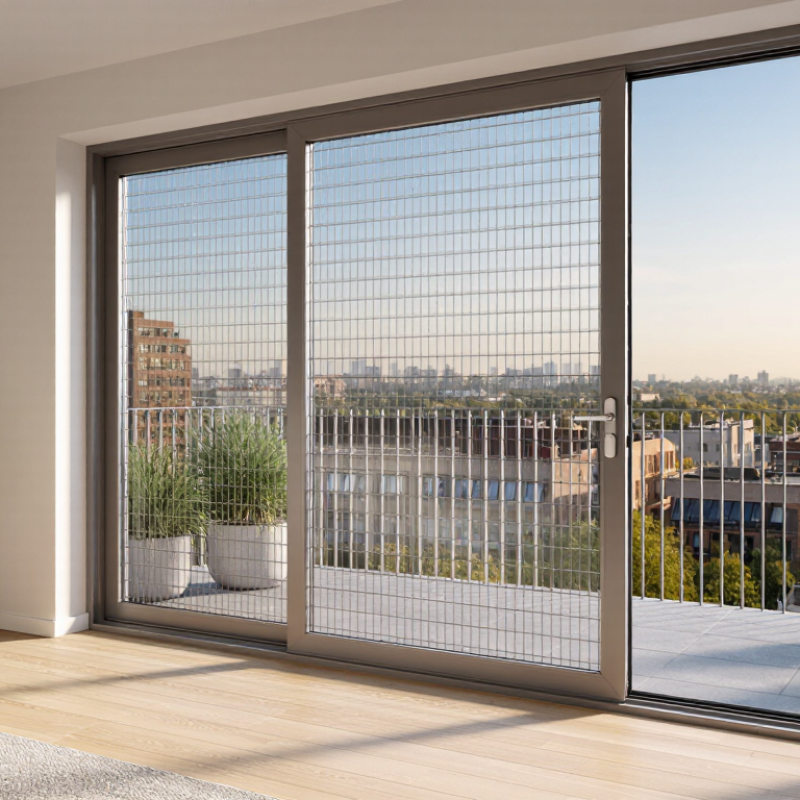
China Top Safety Screen Door Manufacturers for Global Buyers

Defining Safety Screen Doors: Security Mesh, Frames and Intended Use

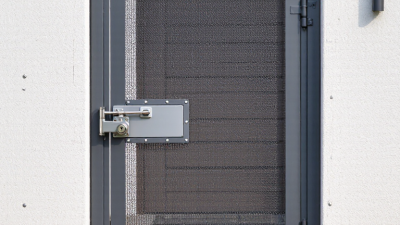
A safety screen door is a framed, mesh-filled door designed to provide ventilation while adding a barrier at an entrance. It is different from a lightweight insect screen. Mesh may be woven stainless steel or another durable material, with openings sized to balance airflow, visibility, and resistance to impact. Small details matter. A mesh that looks strong in a sample may behave differently when stretched across a full door panel.

The frame and its connection to the doorway are just as important as the mesh. Buyers should check frame material, corner joints, hinge strength, lock design, and how the door is fixed to the surrounding structure. Intended use matters: a back door exposed to weather may need corrosion-resistant components, while a frequently used entry needs dependable hinges and easy operation. A safety screen door can add a useful layer, but it should not be treated as a replacement for the main door or its lock. There is no perfect specification for every home. Ask for test details, installation guidance, and maintenance requirements before comparing products; those details are easy to overlook when judging only by mesh appearance.

Reading 18×16 Mesh Counts Alongside Wire Diameter and Aperture

For buyers comparing 18×16 safety screen, mesh count is only part of the specification. It means 18 openings per inch in one direction and 16 in the other; wire diameter determines how much space remains open. ASTM E2016-22, the Standard Specification for Industrial Woven Wire Cloth, treats mesh count and wire diameter as distinct specification variables. Check both, not the label alone.

A useful estimate is aperture = 25.4 mm ÷ mesh count − wire diameter. With a hypothetical 0.23 mm wire, an 18×16 weave yields openings near 1.18 × 1.36 mm. These are calculated figures, not certified product measurements. Real openings can vary with weave and manufacturing tolerances. Small differences matter. Ask suppliers for measured aperture, wire diameter, and tolerance data, then compare samples with a calibrated gauge. A ruler can mislead here.

One detail is easy to overlook: heavier wire may improve stiffness but reduce clear opening and airflow. Test the actual screen in its frame, especially near corners where tension can distort the weave. The calculation is a starting point, not a substitute for inspection. A slightly uneven edge is worth recording, even if the center looks consistent.

Applying AS/NZS 5039, 5040 and 5041 to Assess Door Compliance

For global buyers, a safety screen door should be assessed as a complete assembly, not just by its mesh.

AS/NZS 5039 sets requirements for security screen doors and window grilles.
AS/NZS 5041 outlines test methods,
while AS/NZS 5040 addresses installation.

Each standard examines a different part of the compliance picture.

Ask for test documentation that identifies the door configuration tested, including its frame, mesh, locks, and fixings. Then compare it with the model being quoted. A report for a similar-looking door may not cover different hinges or mesh retention. Small details matter. Check that the installer’s fixing method and spacing match the applicable installation requirements, rather than relying on appearance alone.

Look closely at the frame corners and lock-side edge. These areas can reveal whether components align and close securely, though a visual check cannot replace formal testing.

A neat certificate is not the whole story. Buyers should also confirm the standards’ editions and whether the reports apply to the intended market. Requirements and acceptance can vary by destination, so written clarification is useful. It may feel repetitive, but that check can prevent a costly mismatch.

Comparing Chinese Manufacturers by Materials, Testing and Export Capability

China Top Safety Screen Door Manufacturers for Global Buyers

Comparing manufacturers starts with the materials behind the finished door. Aluminum frames are light and resist rust, but thin profiles may flex under pressure. Stainless-steel mesh can offer stronger resistance to tearing, while fiberglass mesh is lighter and easier to handle. Ask for mesh grade, frame dimensions, and finish details—not just a product photo. Details matter.

Testing claims deserve careful review. Request dated reports or recorded results for mesh pull strength, repeated opening and closing, corrosion exposure, and frame alignment. Check that the tested sample matches the model being quoted. A glossy report may still leave questions about test conditions, and buyers should compare methods rather than rely on vague words such as “durable.” Export capability matters too: confirm packing protection, production lead times, spare-part availability, and whether drawings can be checked before production. Ask for proof.

Tips: Request a sample and inspect its corners, handle fit, mesh tension, and sliding or hinge action. Compare written specifications line by line. If a supplier cannot explain a test result clearly, pause and ask again. I would not treat the lowest quote as the safest choice; however, higher pricing alone does not prove better quality. A small mismatch in measurements can become an expensive problem after shipment.

China Top Safety Screen Door Manufacturers for Global Buyers - Comparing Chinese Manufacturers by Materials, Testing and Export Capability

A practical, brand-neutral comparison framework for assessing manufacturers. The entries describe materials, standards and evidence buyers can verify; they do not represent claims about any specific supplier.

Comparison area Common options or factual baseline Evidence to request from a manufacturer How global buyers can assess it
Frame material Aluminum is commonly used for screen-door frames. Alloy, temper, wall thickness, finish and profile design vary by product. Material specification identifying alloy and temper; profile drawings; stated wall thickness and finish specification; batch or mill documentation where available. Compare the documented specification with the project’s exposure, dimensions and installation requirements. Do not compare products by alloy name alone.
Mesh material Common choices include fiberglass, aluminum and stainless steel mesh. Stainless steel grades such as 304 and 316 have different compositions and corrosion resistance. Mesh material and grade, wire diameter, aperture, weave, coating information and a sample matching the production specification. Check that the quoted mesh matches the intended use and local environment. Mesh material by itself does not establish security or impact performance.
Safety function An insect screen, a security screen and a fall-prevention device serve different purposes; a standard insect screen should not be assumed to provide security or fall protection. A written statement of intended use and any relevant report for the complete door assembly, including frame, mesh, fasteners, lock and hinges. Confirm that the test scope and configuration match the product being purchased and the required safety function.
Structural testing ASTM E330/E330M describes a test method for structural performance of exterior windows, doors, skylights and curtain walls under uniform static air-pressure difference. Full test report stating the standard and edition, specimen size, test configuration, pressure levels, results and laboratory details. Check whether the report covers the same door type and installation conditions. A test method reference alone is not proof of a particular performance rating.
Corrosion testing ASTM B117 describes an apparatus and procedure for salt-spray (fog) testing. It does not itself specify a universal acceptance limit or convert test hours into service life. Test report with the tested component or coating, preparation method, exposure duration, evaluation criteria and observed results. Compare results only when the test method, specimen preparation and pass criteria are comparable. Consider the intended installation environment.
Insect-screen specification ASTM D3656/D3656M covers insect screening and screening materials. Applicability depends on the product and the buyer’s specification. Report or declaration identifying the exact mesh material and construction assessed, the standard edition and the test results. Confirm that the scope covers the supplied mesh; do not treat an insect-screen specification as a security-door certification.
Security classification EN 1627 sets requirements and classification for resistance to burglary of pedestrian doorsets, windows, curtain walling, grilles and shutters within its scope. Where a classification is claimed, request the certificate and supporting report for the relevant complete product configuration, including hardware and installation details. Verify that the actual screen-door construction and intended use fall within the assessment. A component-level claim is not equivalent to a classified doorset.
Quality management ISO 9001 concerns quality-management systems; it is not a product-performance certification. Current certificate showing the certified legal entity, site, scope and certification body; production inspection and traceability procedures. Check the certificate’s scope and validity separately from product test reports and regulatory approvals.
Export documentation International shipments commonly involve a commercial invoice, packing list and transport document. Other documents depend on the destination, transaction and product. Sample redacted shipping-document set; proposed Incoterms® 2020 rule and named place; confirmation of origin-document support where required. Agree responsibilities for customs declarations, duties, insurance and transport in the contract. Confirm destination-country requirements with the importer or customs broker.
Tariff classification HS classification depends on the product’s construction, function and the importing country’s tariff schedule. A supplier’s suggested code is not a binding customs ruling. Product description and technical details used to support the proposed classification, plus any prior ruling relevant to the destination market. Have the importer or customs broker verify the classification and applicable duties for the destination country before ordering.
Packaging and shipment readiness Suitable packaging depends on door dimensions, finish, shipment mode, handling and destination. Export packaging needs to protect edges, corners, hardware and surface finishes. Packaging drawings or photos, packing method, carton or crate dimensions, gross weight and marking details; sample packaging review for large or fragile orders. Check that packing details suit the planned transport route and unloading method. Confirm who bears the cost and responsibility for any specified packaging changes.
Order consistency and inspection Samples and production units can differ unless specifications, approved samples and inspection criteria are controlled. Approved drawings and sample references, written acceptance criteria, batch identification and agreed pre-shipment inspection checklist. Record all critical dimensions, materials, finishes and hardware in the purchase specification; agree inspection timing and defect handling before production.

Buyer note: Standards and regulatory requirements can change and may be adopted differently by destination markets. Confirm the applicable edition, product scope and local requirements for each project. Request reports and certificates that are traceable to the exact product configuration being quoted.

Building a Global-Buyer Checklist for Specifications, Sampling and QC

For global buyers, a safety screen door specification should describe the opening, not just the product name. Record finished width and height, frame depth, mesh material, mesh opening, finish, hinge side, lock type, and handle position. State measurement tolerances and whether dimensions refer to the frame or clear passage. Small ambiguities can lead to costly remakes.

Request a production-representative sample before approving an order. Check how the door closes, whether the latch aligns, and if the mesh stays taut when pressed lightly. Compare the sample’s color and surface finish in daylight, not only under showroom lighting. Keep it measurable. Sign off on key dimensions and retain an approved reference sample; otherwise, “matching the sample” can mean different things to different teams.

A useful QC plan names inspection stages, sample quantities, and pass-or-fail criteria. Check incoming frame and mesh materials, then review assembly, hardware operation, finish, and packaging before shipment. Ask for dated inspection records and clear photos of any defects. No checklist catches every installation quirk. Revisit the specification after the first delivery, especially if fit, handling, or transit protection proved less reliable than expected.

China Safety Screen Door Buyers’ Checklist

A practical checklist for comparing specifications, reviewing samples and planning quality control.

Checklist coverage: Specifications (dimensions, frame and mesh materials, finish, hardware); Sampling (fit, operation, finish and packaging); QC (materials, dimensions, mesh and assembly, operation, finish, final packaging). Counts represent items in this illustrative buyer checklist—not supplier performance data or an industry benchmark.