Choosing among China’s leading manufacturers of Security Roller Shutters takes more than comparing prices and product photographs. A shutter protects a specific opening, under specific conditions, with maintenance needs that buyers sometimes underestimate. Details matter. A warehouse entrance exposed to coastal weather faces different demands from an indoor retail counter. Slat construction, guide rails, locking systems, and installation quality all deserve attention before an order is placed.
Security expert Bruce Schneier offers a useful principle: “Security is a process, not a product.” His observation provides a practical lens for evaluating shutter suppliers, beyond the appearance of a finished curtain. Ask for evidence. A supplier should explain which test reports apply to the exact model being quoted. Steel thickness alone cannot establish resistance to forced entry. Motor specifications, manual override arrangements, and spare-parts availability also affect everyday reliability. For coastal installations, ask about coating specifications and corrosion protection. Where fire resistance is required, verify certification for the complete assembly and intended application.
This guide to the top 10 security roller shutter manufacturers in China focuses on purchasing criteria buyers can investigate. Relevant factors include manufacturing capabilities, documented testing, customization options, installation support, and after-sales service. Rankings have limits. A large factory may offer broad production capacity yet provide limited support in your market. A smaller supplier may communicate well but struggle with replacement-part lead times. Neither assumption should become a verdict without evidence. The aim is to help buyers build a defensible shortlist, while recognizing that samples and factory claims cannot predict every installation outcome.
Security roller shutters are movable barriers made from interlocking slats that roll around a barrel above an opening. They commonly protect shopfronts, warehouses, garages, and service counters. Protection varies. Slat thickness, guide strength, locking arrangements, and installation quality all influence resistance to forced entry. A heavy curtain alone cannot compensate for weak fixings or poorly secured side guides. When comparing Chinese manufacturers, request technical drawings and test reports that match the proposed shutter configuration.
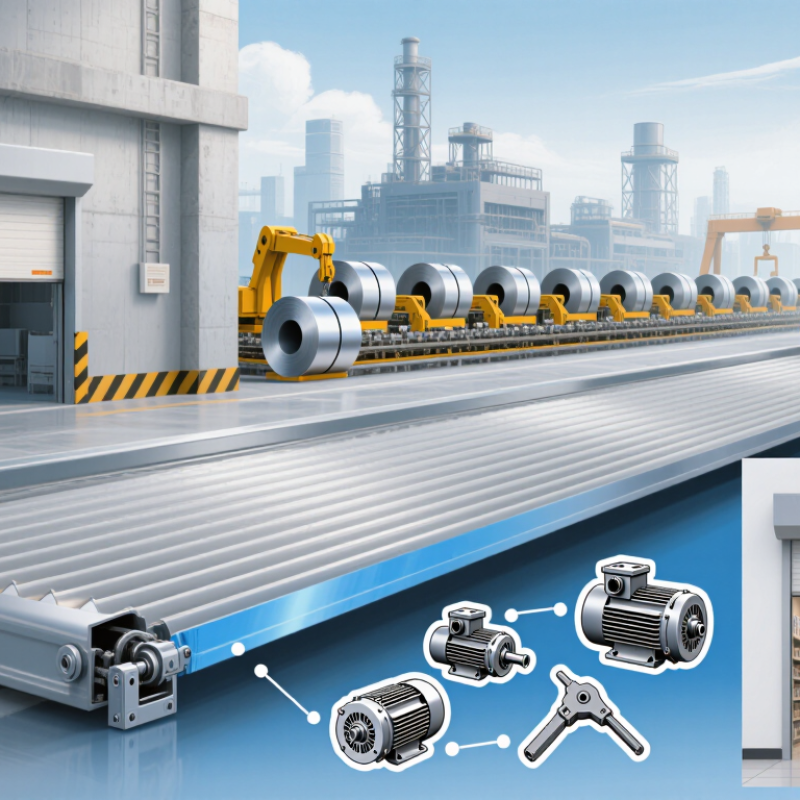
The main components include the slatted curtain, barrel assembly, side guides, bottom rail, and operating mechanism. Steel slats provide strength, while aluminum offers lower weight and corrosion resistance. Neither material guarantees security by itself. Side guides retain the curtain edges, and the bottom rail stiffens the curtain’s lower edge. A hood can cover the rolled curtain and help shield moving parts from dust. Manual shutters may use spring assistance or chain operation; powered versions use a motor and controls. Motor selection should account for curtain weight, operating frequency, and the manufacturer’s specified limits.
Tips: Check the details. Ask how the shutter operates during a power failure and where manual release access is located. For powered shutters, confirm suitable entrapment protection and accessible controls. A quieter motor sounds appealing, but I would question that preference if replacement parts were difficult to obtain. Request maintenance instructions covering guide cleaning, fastener checks, and inspection intervals.
A security roller shutter is a retractable barrier made from interlocking slats that travel within side guides and roll around an overhead barrel. Its main components include the slatted curtain, guide rails, barrel and shaft assembly, brackets, bottom rail, and a manual or motorized operating mechanism. Locking devices and safety controls depend on the design.
Aluminum, carbon steel, and stainless steel are used in roller shutter construction. The chart compares representative material densities, rather than finished shutter weights. At equal solid material volume, carbon steel weighs approximately 2.9 times as much as aluminum. Actual curtain weight also depends on slat thickness, profile geometry, perforations, and insulation.
Material density alone does not establish security performance. Slat construction, guide retention, locking, installation, and tested resistance to forced entry also influence protection.
Data: approximate reference densities near room temperature; values vary by alloy and grade. These figures describe material properties, not manufacturer rankings or security ratings. Reference: Engineering ToolBox — Densities of Metals and Alloys.
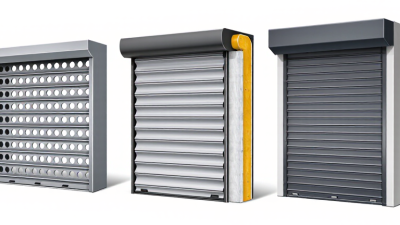
Security roller shutters come in solid, perforated, and grille designs, each balancing privacy, visibility, and airflow differently. Solid curtains suit warehouse entrances and storage rooms where screening the interior matters. Perforated shutters let customers see illuminated displays after closing, although small openings do not guarantee effective ventilation. Grille shutters provide greater openness for shopping mall storefronts and internal retail partitions. Visibility matters. However, open designs offer limited protection against wind-driven rain and dust.
Galvanized steel is commonly chosen for its strength, while aluminum reduces curtain weight and resists corrosion in many environments. Neither material is maintenance-free. Scratched steel coatings need attention, especially around bottom rails exposed to wet floors. Coastal installations require particular care with finishes, fasteners, and cleaning schedules because salt deposits can accelerate deterioration. Insulated double-skin slats can reduce heat transfer, but gaps around guides and lintels still affect overall performance. Thickness alone proves little.
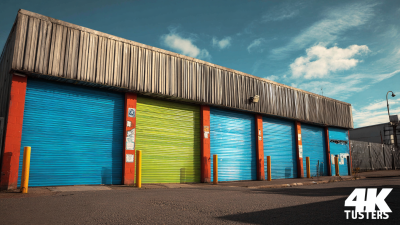
A small shop may prioritize compact headroom and quiet operation; a loading bay needs suitable clearances and frequent-cycle capability. When comparing Chinese manufacturers, request drawings showing guide dimensions, fixing positions, and the shutter box size. Ask for test reports matching the proposed assembly, including its dimensions and mounting arrangement. Motor selection should reflect curtain weight and operating frequency, with appropriate entrapment protection for powered installations. Manual operation during power failures also deserves checking; an accessible release can become awkward behind stocked shelving.
Evaluating security roller shutter manufacturers in China requires more than comparing quotations and catalog photographs. Request a sample specification covering curtain thickness, guide rail dimensions, motor capacity, and corrosion protection. Ask how these specifications match your opening size, installation conditions, and expected operating frequency. Check the evidence. Test reports should identify the tested model, testing laboratory, applicable standard, and results. A certificate for another product provides little assurance about the shutter you intend to purchase.
Factory capability deserves equal attention, especially when ordering shutters for multiple locations. Request production records, inspection checklists, and photographs showing how finished shutters are checked before packing. During a factory visit, watch a complete opening and closing cycle. Listen for scraping, uneven movement, and excessive vibration. Ask how workers record defects and verify repairs. These observations are useful, although one successful demonstration cannot establish consistent production quality. A polished showroom can make that limitation easy to overlook.
After-sales support should influence any shortlist of potential top manufacturers. Request written warranty terms, spare-parts availability, and installation documentation before paying a deposit. Details matter. Confirm who handles motor failures, replacement shipping costs, and technical support across time zones. A lower quotation may still suit your project, but unclear exclusions deserve another conversation. Buyers sometimes overvalue curtain thickness while overlooking guide alignment and access for maintenance. Ask suppliers to explain those trade-offs using drawings for your actual opening.
Use this weighted evaluation framework to compare manufacturers. The weights are suggested assessment criteria, not ratings or verified performance data for any specific company. Score each criterion from 0 to 5: 0 = no evidence, 3 = acceptable evidence, 5 = strong, independently verifiable evidence.
| No. | Evaluation Criterion | Weight | What to Assess | Evidence to Request |
|---|---|---|---|---|
| 1 | Product safety and applicable standards | 15% | Whether the shutter and its operating system are designed and documented for the destination market. For relevant European applications, check the applicability of EN 13241 and safety requirements such as EN 12453. | Current test reports, declarations or certification documents where applicable, installation instructions, and a clear list of covered product models. |
| 2 | Security performance | 15% | Resistance features relevant to the intended risk, including slat and guide design, locking arrangements, bottom-bar construction, and resistance to lifting or forced manipulation. Avoid relying on an unsupported general “security grade.” | Product-specific test results or documented test methods, drawings of locking and guide details, and clearly stated limitations of the tested configuration. |
| 3 | Wind-load performance | 10% | Declared wind resistance for the specified shutter size and installation conditions. EN 12424 is a relevant European classification reference for resistance to wind load where applicable. | Test or classification documents identifying the model, dimensions, guide arrangement, installation method, and declared wind-load class or limit. |
| 4 | Quality management | 10% | Documented controls for incoming materials, production, inspection, nonconformities, and corrective actions. ISO 9001 certification can support assessment of a quality management system but does not by itself prove product performance. | A valid ISO 9001 certificate, if claimed, with its scope and issuing certification body; sample inspection records and documented quality procedures. |
| 5 | Testing and traceability | 10% | Whether test evidence is relevant to the quoted configuration and whether finished products and key components can be traced to production batches. | Full reports rather than certificate summaries, report dates and model references, batch or serial-number examples, and records of routine inspections. |
| 6 | Materials and corrosion protection | 8% | Material specifications and protective finishes for the proposed environment, including exposure to moisture, coastal air, chemicals, or frequent use. | Material grades, coating or finish specifications, maintenance guidance, and relevant durability or corrosion-test results where available. |
| 7 | Manufacturing capability | 8% | Ability to produce the required sizes and configurations consistently, manage production schedules, and inspect products before dispatch. | A production-process overview, equipment and inspection descriptions, a sample production schedule, and recent quality-control records. |
| 8 | Customization and system compatibility | 7% | Support for project-specific dimensions, control options, access requirements, finishes, and integration with compatible safety devices or building systems. | Technical drawings, approved configuration lists, compatibility details, and a documented process for reviewing non-standard requirements. |
| 9 | Warranty and after-sales support | 7% | Clarity of warranty coverage, exclusions, spare-parts availability, troubleshooting support, and service arrangements in the buyer’s region. | Written warranty terms, parts list, support contact process, response-time commitments if offered, and maintenance instructions. |
| 10 | Export documentation and delivery | 10% | Readiness to supply accurate product, packing, shipping, and compliance documents for the destination market, with clearly agreed lead times and delivery terms. | Sample technical and shipping documents, packing details, a written lead-time estimate, and the agreed Incoterms® rule and named place. |
| Total weight | 100% | Suggested framework for comparing documented evidence across suppliers. | ||
Profiles of China’s top ten security roller shutter manufacturers need more than factory photographs and production claims. Each profile should identify the factory location, shutter materials, customization options, and available test documentation. Compare actual specifications. Useful details include curtain thickness, guide rail dimensions, motor duty ratings, and manual override arrangements. A warehouse entrance and a small retail frontage require different configurations. Ranking manufacturers without consistent evidence leaves uncomfortable gaps.
Material sourcing provides useful context for evaluating these manufacturers. World Steel in Figures 2024 records China’s 2023 crude steel production at approximately 1.019 billion tonnes. That supply base provides context, but national output cannot establish an individual factory’s quality. Profiles should distinguish galvanized steel, stainless steel, and aluminum shutters while explaining their intended applications. Request coating specifications and corrosion test results, especially for coastal installations. Check the details. A thicker curtain alone does not establish better security; guides, locks, and installation also affect performance.
Energy performance deserves attention when profiling manufacturers offering insulated shutters for conditioned buildings. The 2023 Global Status Report for Buildings and Construction attributes 34% of global energy demand to buildings in 2022. However, insulation claims need documented thermal performance, including clarity about whether testing covers the complete shutter assembly. Profiles should also examine obstacle detection, emergency operation, spare parts, and installation instructions. Published cycle tests deserve scrutiny when their loading conditions differ from daily operation. Missing maintenance schedules or unclear warranty exclusions should remain visible in the assessment.
Comparing China’s top ten security roller shutter manufacturers requires more than checking catalogue sizes. Product ranges should distinguish steel security shutters, insulated aluminium shutters, and perforated shopfront models. These serve different needs. A warehouse opening needs documented wind resistance; a retail entrance may prioritize visibility and access control. Compare complete assemblies. Slat thickness alone cannot establish security performance because guide rails, locks, fixings, and installation also affect resistance.
Customization deserves measurable specifications. Request drawings showing opening dimensions, headroom, guide depth, motor location, and manual override access before approving production. UNEP’s 2022 Global Status Report for Buildings and Construction attributed 34% of global energy demand to the sector in 2021. That figure supports considering thermal performance alongside security, especially for frequently heated warehouses. However, insulated slats do not establish the thermal performance of an entire shutter. Ask for tested values covering the assembled product, including seals and guides, where available.
After-sales support becomes concrete when suppliers identify replacement motors, control boards, and compatible safety devices in writing. Check the details. A useful quotation separates manufacturing lead time, spare-parts dispatch time, warranty coverage, and technical support hours. Request installation instructions, wiring diagrams, commissioning records, and a clear procedure for reporting faults. Remote troubleshooting can help, but it cannot replace a qualified local technician when mechanical repairs are necessary. A ten-company shortlist remains imperfect without comparable test reports and references from installations with similar operating conditions.
WhatsApp us