Choosing Security Doors in 2026 requires more than comparing steel thickness or stylish finishes. A reliable door should fit your property, climate, daily routines, and risk profile. A reinforced apartment entrance may need different protection than a warehouse side door or a family home facing a busy street.
Look closely at the complete door system. The frame, hinges, locks, glazing, seals, and installation all influence performance. A strong slab can still fail when the frame is weak. Ask suppliers for independent test results, product warranties, maintenance guidance, and evidence of compliance with relevant local building and fire-safety requirements. Certification names can sound impressive, but they deserve careful checking.
Smart access is also changing the market. Keypads, mobile credentials, cameras, and audit records may improve control. Yet electronic features require secure updates, reliable power, and a practical backup plan. Technology is not magic. A simple, well-installed lock may outperform a complicated system that nobody maintains.
Think about real use. Will delivery staff need access? Could salt air corrode exposed hardware? Will children, older residents, or people with disabilities operate the door safely? These details often matter more than appearance. Some buyers focus too heavily on forced-entry resistance and overlook fire escape needs, condensation, or daily convenience. That mistake is understandable, but avoidable.
The best choice balances protection, durability, accessibility, and long-term cost. Compare several qualified installers, inspect their previous work, and request clear written specifications. No product is perfect. A thoughtful decision leaves room for maintenance, changing threats, and lessons learned after installation.
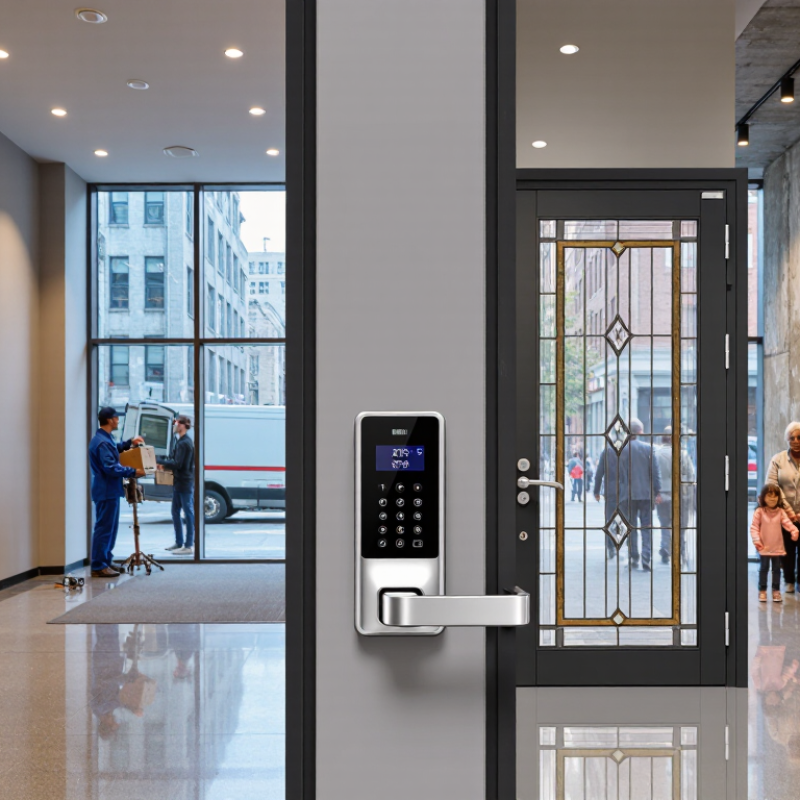
In 2026, choose a security door by matching its construction to a specific threat, not by appearance. A solid-core steel door suits homes, storage rooms, and offices facing forced-entry attempts. A laminated-glass door improves visibility, but its frame and glazing beads need equal attention. Composite doors can balance insulation and resistance. Ventilated security doors may help airflow, yet their mesh and locks require careful testing. Type matters.
Threat levels should describe real conditions. Low threat usually means opportunistic tampering, such as a weak latch or an exposed hinge. Moderate threat may involve repeated prying, impact, or basic hand tools. High threat requires tested assemblies, reinforced frames, protected hinges, and controlled access hardware. Ask for test evidence covering the complete door set, not only the door leaf. Ratings vary by country and test method. A high rating in one system may not equal another.
Measure the opening, wall strength, hinge side, and escape route before ordering. Look for corrosion protection in damp entryways and clear sightlines around the lock. Fire performance, accessibility, and emergency release features also deserve review. A door that resists entry but traps occupants is poor design.
No rating system is perfect. I would rather see a verified report, qualified installation, and a realistic maintenance plan than impressive marketing language. Check screws, seals, closer tension, and frame movement during regular inspections. Small failures become expensive surprises.
How to Choose Security Doors in 2026?
EN 1627 classes provide a practical starting point for burglary resistance. RC2 is tested against basic hand tools, including screwdrivers and pliers. RC3 adds stronger tools, such as a crowbar, and requires five minutes of attack resistance. RC4 covers heavier tools and ten minutes. RC5 and RC6 involve powered tools, with fifteen and twenty minutes of test resistance. These figures describe controlled laboratory attack time, not guaranteed protection in every building.
The FBI’s 2023 Crime Data Explorer recorded 847,522 burglary offenses in the United States. That figure supports careful entry-point planning, but it does not prove that one door class fits every property. EN 1627 evaluates the complete doorset, including the leaf, frame, lock, hinges, glazing, and installation. A certified RC4 door can perform poorly if the surrounding wall is weak. The certificate must match the complete assembly, not just the metal panel.
Tips: Map the doorway first. Check nearby windows, hinges, lighting, and wall construction. Choose RC2 for lower-risk apartments, RC3 for exposed homes, and RC4 or higher for commercial sites with valuable assets. Ask for the test standard, certificate scope, and installation requirements. Do not select RC6 automatically; its weight, cost, and maintenance demands may be unnecessary. I would also question vague claims such as “bulletproof” or “anti-burglar.” A rating is evidence, not a promise.
Choosing a security door in 2026 requires more than comparing steel thickness or lock strength. Fire performance must match the tested door assembly, frame, hardware, glazing, and wall construction.
Under UL 10C, ratings commonly range from 20 to 180 minutes. The test evaluates fire exposure with positive pressure, which can reveal smoke leakage and assembly weaknesses. A 20-minute door may suit a limited opening, while a 90-minute or 180-minute assembly is intended for more demanding fire separations.
EN 1634-1 uses European test methods and often reports integrity and insulation classifications, such as E or EI. Its time ratings may include 30, 60, 90, 120, or 180 minutes. These figures are not automatically equivalent to UL ratings. Testing details differ. Do not treat “90 minutes” as a universal comparison.
Tips: Ask for the complete test report, not only a rating label. Confirm the frame and closer are included. Check whether the glass, hinges, seals, and lockset match the approved assembly. Measure the opening carefully; a small installation gap can affect smoke control. Consult a qualified fire-door inspector before ordering.
Real projects are rarely perfect. Site conditions may differ from laboratory samples, especially around thresholds and uneven walls. I have seen attractive doors fail practical checks because the closer was adjusted incorrectly. Recheck clearances, self-closing action, and latching after installation. A secure door should resist forced entry without weakening the fire-rated assembly. Local building requirements still control the final selection.
How to Choose Security Doors in 2026?
A secure door must control people without obstructing safe evacuation. Check the adopted building code, not only the supplier’s access-control brochure. The 2024 International Building Code and NFPA 101 address electrically locked egress doors, emergency release, fire-alarm interfaces, and power failure behavior. Codes vary. Confirm whether the door must unlock automatically during alarms or outages. Card readers, exit hardware, sensors, and monitoring should be tested together on site. A compliant lock can still become unsafe when installed incorrectly.
Air leakage deserves equal attention. Ask for test results using ASTM E283, including the pressure difference and leakage rate. Inspect the threshold, perimeter seals, hinges, and frame joints with a smoke pencil or thermal camera. Small gaps matter. The U.S. Department of Energy identifies building-envelope performance as a major factor in energy use, while the IEA’s 2024 Global Status Report links buildings to roughly 30% of global final energy demand. A heavy security door can waste energy if its seals compress unevenly. I would not approve a door from a brochure alone.
Compare U-values with the exact climate zone and adopted energy code. NFRC 100 provides a recognized method for determining fenestration U-factors, but ratings must match the complete door assembly. Lower is generally better, yet glass, frames, cores, and edge details change the result. Review the 2021 IECC or locally adopted equivalent before ordering. The imperfect part is field reality: a well-rated door may perform poorly after repeated impacts, warped frames, or neglected maintenance. Schedule seasonal checks, record leakage findings, and replace worn seals before performance declines.
How to Choose Security Doors in 2026?
Material choice should match the building, climate, and threat level. Steel offers strong impact resistance, but poor coatings can rust around hinge cutouts. Aluminum resists corrosion and weighs less, yet it may need reinforced frames. A solid core, multi-point locking system, protected hinges, and a low-profile threshold improve practical security. Do not judge a door by weight alone. Check frame depth, anchor spacing, and how the assembly meets the wall.
Installation often decides whether certified performance survives daily use. A small gap near the latch can reduce sealing and security. Use trained installers who follow the manufacturer’s documented method. Ask for current test reports, certification scope, and applicable local standards. A certificate for the door leaf may not cover the frame, glazing, lock, or installation. That detail is easy to miss.
Calculate the ten-year lifecycle cost, not only the purchase price. Include removal, labor, transport, maintenance, repainting, lock replacement, energy loss, and expected downtime. A basic worksheet can compare two doors clearly. For example, a cheaper unit needing repainting every three years may cost more than a protected steel assembly. Still, predictions are imperfect. Usage, salt air, and careless maintenance can change the result. Leave a repair allowance. Inspect hinges, seals, fasteners, and drainage twice yearly. Keep invoices and test documents; they support future inspections and warranty decisions.
| Door Type | Typical Material and Construction | Typical Door Leaf Weight* | Best-Fit Security Use | Relevant Certification or Testing Route | Indicative Installed Cost** | Estimated 10-Year Lifecycle Cost*** | Main Advantages |
|---|---|---|---|---|---|---|---|
| Galvanized Steel Security Door | Powder-coated galvanized steel skin, reinforced steel frame, multi-point lock preparation, and adjustable hinges. | 45–85 kg for a standard single door | Apartment entrances, utility rooms, offices, warehouses, and general forced-entry protection. | Look for a tested door-and-frame assembly. Common routes include ASTM F3038 for security door assemblies, ANSI/BHMA A156.3 for exit devices, and applicable fire-door testing where required. | US$1,900–4,000 | US$3,400–5,500 | Strong cost-to-security ratio, widely serviceable, good fire-door compatibility, and moderate corrosion resistance when properly coated. |
| Stainless Steel Security Door | 304 or 316 stainless-steel skins and frame, welded or mechanically reinforced construction, with corrosion-resistant hardware. | 55–100 kg for a standard single door | Coastal buildings, healthcare facilities, food-processing areas, laboratories, and high-humidity locations. | Use a tested assembly for forced entry, corrosion exposure, and fire performance if applicable. Stainless grade alone does not establish a security rating. | US$3,400–6,800 | US$4,600–8,000 | Excellent corrosion resistance, hygienic surface, long service life, and lower repainting frequency. |
| Aluminum Security Door | Extruded aluminum frame with reinforced panels, laminated glazing options, and stainless or coated steel locking components. | 25–55 kg for a standard single door | Commercial entrances, schools, offices, and projects where low weight and corrosion resistance are important. | Specify tested glazing, hardware, and complete assembly. Applicable requirements may include ASTM F3038, local building codes, and accessibility standards. | US$2,600–5,400 | US$4,600–7,400 | Lightweight operation, good corrosion resistance, attractive appearance, and relatively simple installation. |
| Fire-Rated Steel Security Door | Insulated steel leaf and frame with tested hinges, closer, latch, glazing where permitted, and fire-rated hardware. | 60–110 kg for a standard single door | Stairwells, corridors, plant rooms, data-center areas, and openings requiring both security and fire separation. | Common fire-testing routes include UL 10C or NFPA 252 in North America and EN 1634-1 in many international markets. The rating applies to the complete listed assembly, not the leaf alone. | US$3,000–5,800 | US$5,000–8,100 | Combines forced-entry resistance with documented fire performance; suitable for regulated commercial projects. |
| Security Door with Laminated Glass | Steel or aluminum frame with laminated security glazing, reinforced glazing beads, and protected locking points. | 50–95 kg for a standard single door | Retail, reception areas, schools, banks, and facilities requiring visibility with improved impact resistance. | Specify the tested glazing and frame together. Relevant tests may include ASTM F1233 or EN 356 for security glazing, plus the applicable door and fire standards. | US$4,000–8,500 | US$6,000–10,500 | Visibility, daylight, and improved resistance to impact and glass penetration compared with ordinary single glazing. |
| High-Security Steel Door Assembly | Heavy-gauge steel, internal stiffeners, reinforced frame anchorage, protected hinges, anti-pry details, and high-security locking hardware. | 80–160 kg for a standard single door | Critical infrastructure, secure storage, telecommunications rooms, detention-related areas, and high-threat locations. | Specify an independently tested complete assembly under the required forced-entry standard. Confirm attack class, tools, test duration, frame anchorage, and hardware configuration. | US$5,000–11,000 | US$7,500–14,000 | Highest resistance potential, robust frame anchorage, replaceable hardware, and strong performance in demanding environments. |
WhatsApp us