
China Top 10 Security Doors Suppliers for Global Buyers
Security Doors are becoming a practical investment for global buyers, not merely an architectural upgrade. Rising concerns about burglary, fire exposure, weather damage, and controlled access are reshaping commercial and residential construction. Market reports from Grand View Research and MarketsandMarkets indicate continued growth in advanced door, access-control, and building-security markets. However, these reports classify products differently. Direct comparisons can mislead.
Performance matters more than a polished catalogue. Buyers should examine steel thickness, core materials, hinge design, lock certification, fire resistance, corrosion protection, and laboratory test evidence. Standards such as EN 1627, UL 10C, UL 752, and ASTM-related requirements may apply, depending on the project and destination. A reliable supplier should explain testing scope clearly. It should also provide drawings, installation guidance, warranty terms, and traceable quality records.
Bruce Schneier, a widely cited security expert, said, “Security is a process, not a product.” That principle also applies to doors. A heavy leaf cannot compensate for weak frames, poor anchors, or careless installation. Small details matter. A visible 3-millimeter frame gap can undermine an otherwise strong assembly.
This guide reviews China’s top 10 Security Doors suppliers for global buyers. It considers manufacturing experience, customization capacity, export performance, certifications, quality control, and after-sales support. The ranking is not absolute. Supplier suitability depends on climate, building type, local standards, budget, and project risk. Buyers should verify every claim independently. That step is often missed. It should not be.
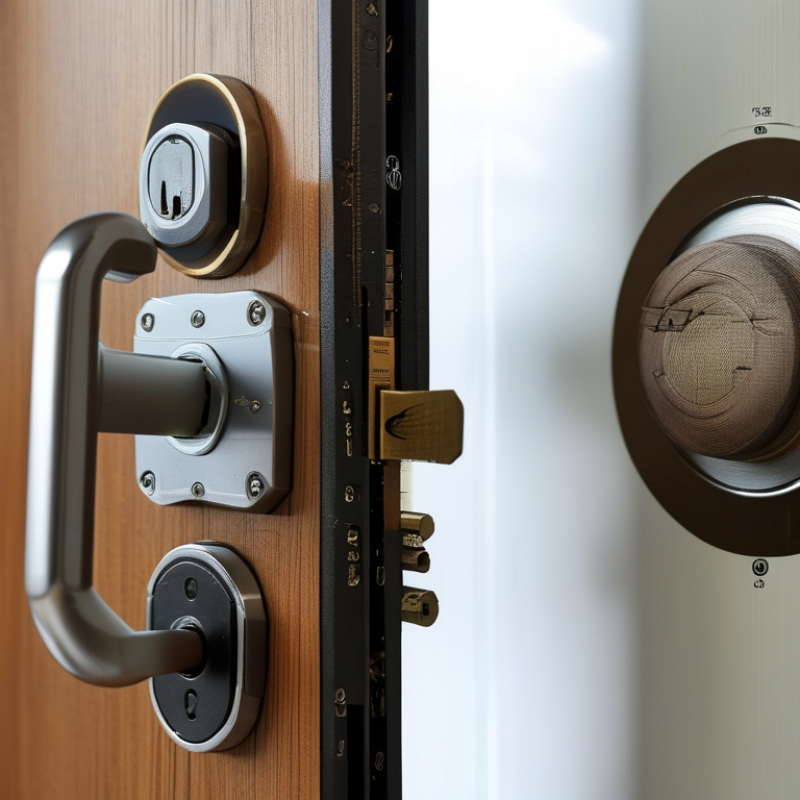
China Security Door Industry: GB/T 17565, EN 1627, and ISO 9001
China Top 10 Security Doors Suppliers for Global Buyers
China’s security door industry serves residential, commercial, and industrial projects worldwide. Buyers should examine compliance beyond attractive catalogs and polished factory videos. GB/T 17565 is a key Chinese standard for security door construction and performance. It addresses areas such as door structure, locking components, and resistance requirements. However, a certificate alone does not prove every production batch performs identically.
EN 1627 uses resistance classes to evaluate doorsets against defined burglary attack methods. Its assessment normally considers the complete doorset, including the frame, lock, hinges, and installation conditions. This matters during procurement. A strong door leaf may still underperform if the frame bends or the hinge side is poorly secured. Request the test report, tested configuration, resistance class, and installation guidance. Check whether the supplied model matches the tested sample.
ISO 9001 indicates a structured quality management system, not automatic product excellence. Reliable suppliers should control incoming steel, welding procedures, coating thickness, lock assembly, and final inspection records. Ask for traceability on sampled orders. Small details reveal experience: consistent gaps around the leaf, protected corners during shipping, and clear adjustment instructions. Factory systems can look impressive. Site installation remains a weak point, and buyers sometimes overlook it. I have seen documentation appear complete while practical fitting information was vague. That deserves a second review. Independent inspection before shipment can reduce uncertainty, especially for large projects with varied door sizes and hardware combinations.
China Top 10 Security Doors Suppliers for Global Buyers – China Security Door Industry: GB/T 17565, EN 1627, and ISO 9001
| Supplier Profile | Recommended Buyer Segment | Typical Door Construction | GB/T 17565 Requirement | EN 1627 Requirement | ISO 9001 Evidence | Security Hardware Scope | Export Documentation | Factory Verification Priority | Commercial Due-Diligence Focus |
|---|---|---|---|---|---|---|---|---|---|
| Supplier Profile 01 | Residential developers and apartment projects | Steel security leaf with reinforced internal ribs, multi-point lock preparation, and powder-coated finish | Required Request a current test report applicable to the offered door configuration |
Target RC2 EN 1627 RC classes apply to the complete doorset, not only the door leaf |
Verify Check certificate scope, issuing body, validity, and manufacturing address |
Mortise lock, hinge reinforcement, peephole, optional closer, and adjustable frame anchors | Commercial invoice, packing list, certificate of origin, product drawings, and installation instructions | Welding quality, frame-to-leaf alignment, lock installation, and coating thickness records | Stable production capacity, repeatability between batches, and spare-hardware availability |
| Supplier Profile 02 | High-rise residential and condominium projects | Cold-rolled or galvanized steel construction with fire-rated infill options and heavy-duty frame | Required Confirm dimensions, impact resistance, lock performance, and labeling requirements under the applicable edition |
Target RC3 Require a test report for the complete doorset with the proposed hardware and glazing configuration |
Preferred ISO 9001 should cover design, production, inspection, or relevant manufacturing activities |
Multi-point locking system, security cylinder, anti-pry features, and reinforced strike plates | Door schedule, hardware schedule, installation method statement, inspection records, and export packing specification | Dimensional control, corner welding, frame anchoring, and lock-cycle inspection | Project coordination, shop-drawing approval, delivery scheduling, and defect-replacement procedure |
| Supplier Profile 03 | Hotels, serviced apartments, and mixed-use buildings | Steel or steel-and-aluminum doorset with concealed reinforcement and architectural decorative skins | Confirm Verify whether the intended application requires additional fire, acoustic, or smoke-control testing |
Target RC2–RC3 Select the resistance class according to project risk and the tested doorset design |
Verify Audit traceability from purchase order to final inspection |
Commercial lever handle, panic or emergency hardware where required, door closer, and access-control preparation | Installation drawings, maintenance instructions, hardware certificates, and material declarations where applicable | Finish consistency, acoustic seals, hinge-side reinforcement, and hardware compatibility | Customization control, sample approval, color matching, and on-site technical support |
| Supplier Profile 04 | Detached houses and premium residential construction | Insulated steel doors with decorative laminate, powder coating, or wood-effect exterior finish | Required Use reports and drawings matching the actual panel thickness, core, frame, and lockset |
Target RC2 Confirm resistance performance with the specified cylinder, escutcheon, hinges, and glazing |
Preferred Confirm the certificate is not expired and applies to the supplying production site |
Five-point or multi-point lock, adjustable hinges, weather seals, and optional smart-lock preparation | Color specification, installation guide, warranty terms, spare-parts list, and palletization details | Door flatness, seal compression, hinge adjustment, and decorative-surface protection | Small-batch flexibility, sample-to-production consistency, and warranty responsiveness |
| Supplier Profile 05 | Commercial offices and retail premises | Steel doorset with reinforced frame, commercial hardware preparation, and optional vision panel | Confirm Check the applicable Chinese classification and project-specific performance requirements |
Target RC3 Verify that any vision panel, ventilation grille, or access-control cutout is included in testing |
Preferred Review internal nonconformance, corrective-action, and final-inspection records |
Commercial cylinder, lever handle, access-control cutout, door closer, and panic hardware options | Technical submittal, hardware compatibility statement, installation details, and shipment inspection report | Frame squareness, hardware cutout accuracy, leaf clearance, and closer installation | Drawing approval, interface coordination with security systems, and replacement-part lead time |
| Supplier Profile 06 | Warehouses, logistics facilities, and industrial sites | Heavy-gauge steel leaf with reinforced frame, anti-corrosion coating, and high-cycle hardware | Required Confirm structural performance, locking arrangement, and suitability for the intended operating environment |
Target RC3–RC4 Use an independently tested doorset when elevated attack resistance is required |
Verify Confirm process controls for welding, coating, assembly, and final inspection |
Heavy-duty hinges, hardened security cylinder, reinforced strike area, and optional panic exit hardware | Load and unloading instructions, corrosion-treatment specification, drawings, inspection records, and packing list | Weld penetration, frame rigidity, hinge load capacity, and coating adhesion | Operating-cycle capability, corrosion resistance, maintenance access, and site installation method |
| Supplier Profile 07 | Schools, hospitals, and public-sector buildings | Steel doorset designed for frequent use with hygienic, impact-resistant, or easy-clean finish options | Project-specific Confirm safety, accessibility, fire, and emergency-egress requirements in addition to security performance |
Target RC2–RC3 Check compatibility with panic devices, closers, glazed sections, and escape routes |
Preferred Require documented inspection and corrective-action procedures |
Panic exit device, anti-finger-trap option, door closer, stainless accessories, and access-control preparation | Material declarations, cleaning instructions, accessibility details, installation guide, and warranty documentation | Safe edge conditions, closing force, latch engagement, and hardware durability | Regulatory coordination, service network, installation training, and public-project documentation |
| Supplier Profile 08 | Data rooms, utility facilities, and restricted-access areas | Reinforced steel doorset with limited glazing, concealed fixing options, and controlled-access preparation | Required Request evidence for the complete door assembly and confirm the required security classification |
Target RC4 RC4 indicates a higher resistance class and must be supported by a relevant complete-doorset test |
Preferred Verify manufacturing controls for critical security components |
High-security cylinder, protected strike box, concealed hinges, access-control wiring route, and door status contact preparation | Confidential drawing-control process, component list, inspection report, packing details, and installation procedures | Protected lock area, hinge-side security, frame anchoring, and unauthorized-access resistance | Confidentiality controls, controlled document release, customization accuracy, and service response |
| Supplier Profile 09 | Renovation contractors and replacement-door programs | Made-to-measure steel doors with adjustable frame solutions and replacement-friendly hardware layouts | Confirm Ensure the supplied configuration remains within the scope of the applicable test or certification evidence |
Target RC2 Check installation conditions because wall fixing and frame installation affect doorset performance |
Verify Confirm production traceability for non-standard dimensions and replacement orders |
Retrofit lock options, adjustable hinges, replacement cylinders, weather seals, and threshold options | Measurement form, installation template, replacement-part list, warranty conditions, and carton markings | Measurement accuracy, tolerance control, frame adjustment, and packaging against transport damage | Low-volume ordering, replacement compatibility, technical drawings, and after-sales support |
| Supplier Profile 10 | International distributors and private-label importers | Modular steel doorset platform with configurable dimensions, finishes, locks, and accessories | Required Obtain original test documentation and verify that the production model matches the documented configuration |
Target RC2–RC4 Choose the class according to destination-market risk and project specification |
Preferred Audit certificate authenticity, scope, site address, and surveillance status |
Private-label locksets, cylinders, access-control preparation, panic hardware, closers, and decorative accessories | Technical file, product labeling, barcode data, export carton specification, origin documents, and inspection records | Production traceability, incoming-material control, final inspection, and container-loading procedure | MOQ, tooling ownership, intellectual-property protection, delivery reliability, and private-label consistency |
Buyer note: GB/T 17565, EN 1627, and ISO 9001 serve different purposes. GB/T 17565 is a Chinese security-door product standard; EN 1627 classifies resistance to burglary attack for a complete doorset; ISO 9001 evaluates the quality-management system rather than the security performance of a specific door. Buyers should verify current certificates, test reports, certificate scope, production-site details, and actual product configuration before placing an order.
Related Posts
-

The Ultimate Security Door Installation Checklist for Global Sourcing Success
-

Unlocking Peace of Mind with Security Doors You Didnt Know You Needed
-
Top 10 Security Doors: Enhance Your Home's Protection Today
-
Comprehensive Guide to Security Doors and Screens Features and Optimal Selection for Global Buyers
-
The Ultimate Guide to Choosing the Best Steel Security Screen Door for Your Home
-
Premium Security Doors from China's Leading Factory: Exceptional Quality for Global Markets