
2026 Top Types of Security Roller Shutters for Global Buyers
Choosing the right Security Roller Shutters in 2026 requires more than comparing prices or attractive product photographs. Global buyers must consider building use, climate, opening size, security requirements, installation conditions, and local safety standards. A shutter designed for a small retail window may not suit a warehouse entrance exposed to strong coastal winds.
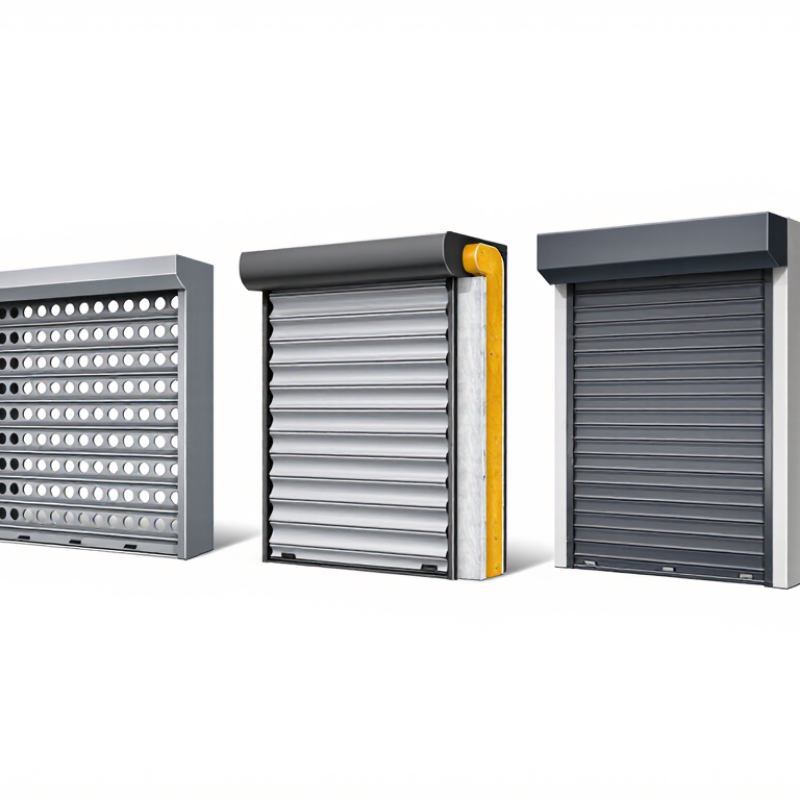
This guide examines the leading types available to international buyers, including solid aluminum shutters, perforated security shutters, insulated roller shutters, steel industrial shutters, and specialized fire-resistant systems. Each option offers different advantages. Solid slats provide stronger visual privacy, while perforated designs allow airflow and product visibility. Insulated profiles can reduce heat transfer and outside noise. Steel systems often support demanding commercial applications, but their weight may require reinforced guides, stronger motors, and careful structural planning.
Real-world performance depends on more than the curtain material. Experienced installers check guide alignment, fixing points, emergency operation, motor capacity, wind exposure, and maintenance access. Buyers should request technical drawings, test reports, warranty terms, spare-parts information, and installation instructions from reliable suppliers. Certification claims also require verification against the destination market’s accepted standards.
There is no universal best choice.
A practical comparison can still miss important details. For example, a high-security shutter may perform poorly when installed on a weak wall or neglected after installation. This article therefore focuses on balanced selection, transparent specifications, and long-term usability. It also recognizes an uncomfortable point: some product descriptions sound more impressive than their tested performance. Careful questions remain essential.
What Are Security Roller Shutters and How Do They Work?
2026 Top Types of Security Roller Shutters for Global Buyers
What Are Security Roller Shutters and How Do They Work?
Security roller shutters are protective barriers made from linked metal slats. They cover windows, doors, shopfronts, and other vulnerable openings. When opened, the curtain rolls around a barrel above the opening. When closed, the slats move through side guides and form a continuous shield.
Most systems use a tubular motor, control switch, or manual spring mechanism. The motor turns the barrel, lifting or lowering the curtain at a controlled speed. Strong guide rails help prevent sideways movement. Bottom rails may include safety edges that stop the shutter when they detect an obstruction. Some installations also use alarms, remote controls, or connection to a building management system.
Material and construction greatly affect real performance. Aluminium shutters are lightweight and resist corrosion, while steel options usually provide greater impact resistance. Perforated designs allow visibility and airflow, but they offer less privacy than solid slats. Buyers should examine slat thickness, guide depth, locking design, motor limits, and emergency opening access.
They are not magic.
A poorly fitted shutter can rattle, jam, or leave gaps around the frame. Dust, salt air, and repeated cycling also reduce reliability. In my experience, accurate measurements and regular inspection matter as much as the shutter material. Local building, fire, electrical, and accessibility requirements should be checked before installation. Safety testing must match the actual opening, usage frequency, and surrounding conditions.
2026 Top Types of Security Roller Shutters for Global Buyers - What Are Security Roller Shutters and How Do They Work?
| Security Roller Shutter Type | Typical Construction | How It Works | Security and Privacy | Visibility and Ventilation | Common Applications | Main Advantages | Important Considerations |
|---|---|---|---|---|---|---|---|
| Solid Aluminum Roller Shutters | Interlocking single-wall or double-wall aluminum slats, often with a bottom rail, side guides, axle, and protective box. | Motorized or manually operated slats travel vertically in side guides and coil around an overhead barrel when opened. | High privacyGood deterrence Creates a continuous closed barrier when fully lowered. |
Very limited visibility and airflow when closed. | Retail storefronts, offices, warehouses, service counters, and residential garages. | Lightweight, corrosion-resistant, relatively quiet, and available in insulated configurations. | Aluminum is lighter than steel but can be more vulnerable to severe impact or forced deformation if an unsuitable profile is selected. |
| Steel Roller Shutters | Galvanized or coated steel slats with reinforced end locks, guides, bottom rail, and a spring or motorized barrel assembly. | The curtain rolls onto a barrel above the opening and is restrained by side guides and locking components when closed. | High securityHigh privacy Suitable for applications requiring a stronger physical barrier. |
Minimal visibility and ventilation in the closed position. | Industrial buildings, warehouses, loading areas, workshops, and high-risk commercial openings. | High stiffness, strong resistance to impact, and suitability for larger or heavier curtains. | Heavier than aluminum; protective coatings and regular inspection are important in humid, coastal, or corrosive environments. |
| Perforated Security Roller Shutters | Perforated aluminum or steel slats with evenly distributed holes or slots across the curtain. | The perforated curtain rolls upward while maintaining a partially open visual and airflow pattern when lowered. | Moderate to high securityPartial privacy Provides a physical barrier while allowing products or interior lighting to remain visible. |
Good airflow and outward visibility compared with solid shutters. | Shopping centers, retail displays, pharmacies, reception areas, and internal commercial partitions. | Balances security, ventilation, daylight, and product visibility. | Perforations may provide less privacy and impact resistance than a solid curtain; opening size should be selected carefully. |
| Transparent Polycarbonate Roller Shutters | Interlocking transparent or translucent polycarbonate slats supported by aluminum or steel components. | The curtain rolls into an overhead housing while maintaining a transparent screen across the opening when closed. | Moderate securityHigh visibility Discourages casual access while keeping merchandise visible. |
High visibility; ventilation depends on the slat design and installation. | Retail storefronts, shopping malls, airports, showrooms, and indoor commercial areas. | Maintains visual merchandising, allows light transmission, and creates a clean architectural appearance. | May scratch or discolor if exposed to unsuitable chemicals, excessive abrasion, or prolonged weathering; it is not equivalent to solid steel for high-impact security. |
| Grille-Style Roller Shutters | Linked metal grille sections or tubular links mounted in side tracks and connected to a top roller assembly. | The grille curtain rolls or folds into a compact overhead or side housing, depending on the system design. | Moderate securityVisual deterrence Restricts entry while leaving much of the opening visually open. |
Excellent visibility and airflow. | Retail stores, food courts, bank counters, service windows, and indoor mall units. | Compact storage, strong ventilation, and continued visibility of the protected area. | Provides less privacy and weather protection than solid shutters and may not be suitable for locations needing a sealed barrier. |
| Fire-Rated Rolling Shutters | Fire-resistant steel curtain, guides, bottom bar, hood, fusible or controlled release device, and tested supporting hardware. | The shutter closes automatically or through a fire-control signal to help compartmentalize an opening during a fire event. | Security functionFire compartmentation Provides a closed metal barrier when deployed, subject to the tested system configuration. |
Very limited visibility and ventilation when closed. | Industrial facilities, kitchens, warehouses, service openings, and fire-separated areas. | Combines access control with fire-compartmentation performance when correctly tested and installed. | Fire-resistance ratings, release methods, clearances, and maintenance requirements vary by jurisdiction and tested assembly; local approval is essential. |
| Insulated Roller Shutters | Double-wall aluminum or steel slats containing an insulating core, with seals, guides, and a bottom rail. | Motorized or manual lifting moves the insulated curtain vertically into an overhead roll or housing. | Good securityHigh privacy Offers a continuous barrier when fully closed. |
Limited visibility and ventilation; thermal performance is improved compared with non-insulated profiles. | Cold-storage access areas, workshops, garages, commercial buildings, and climate-controlled spaces. | Improves thermal separation, reduces drafts, and can help reduce noise transmission. | Heavier and usually more expensive than basic hollow profiles; guides, motors, and structural supports must be sized for the curtain weight. |
| High-Speed Security Roller Doors | Reinforced flexible or rigid curtain, heavy-duty side guides, drive motor, control panel, safety sensors, and bottom-edge detection. | Opens and closes rapidly using a powered drive and control system; safety sensors stop or reverse movement when an obstruction is detected. | Operational securityAccess control Reduces the time an opening remains exposed rather than relying only on curtain strength. |
Visibility and ventilation depend on whether the curtain is solid, windowed, or perforated. | Distribution centers, manufacturing plants, logistics facilities, clean areas, and frequently used internal openings. | Fast cycles, improved traffic flow, reduced air exchange, and compatibility with access-control systems. | Requires reliable electrical power, programmed safety controls, planned maintenance, and suitable structural support. |
How security roller shutters work: A shutter curtain made from connected slats or links moves vertically inside side guides. When opened, the curtain coils around an overhead barrel or retracts into a housing. When closed, the bottom rail, side guides, locking system, and curtain form a barrier across the opening. Final security performance depends on the curtain material, slat profile, guide design, locking method, motor controls, installation quality, and applicable local testing requirements.
Related Posts
-

Ultimate Checklist for Choosing the Right Roller Shutters for Your Business Needs
-
7 Essential Tips for Selecting the Best Roller Shutters for Your Business Needs
-

The Evolution of Roller Shutters in Modern Architecture
-

Top 10 Benefits of Security Shutters for Your Home?
-

Understanding Production Standards for Roller Shutters and Tips for Optimal Installation
-

Global Excellence in Security Screen Door Installation Crafted in China