In 2026, choosing an alloy steel is less about finding one “best” grade and more about matching chemistry to the job. A low-alloy structural plate may suit a bridge component, while chromium-molybdenum steel can handle heat and pressure in engineered equipment. Tool steels are designed to resist wear at cutting edges. Bearing and spring steels serve different needs again. The names matter, but the details matter more.
This guide compares the leading Alloy Steel types by composition, properties, and common applications. It also explains how heat treatment, section thickness, operating temperature, and corrosion exposure can change a material’s performance. Picture a machined shaft with a hard surface and a tough core; a grade that works for one shaft may fail in another design. Small differences count.
There is no universal ranking. Not quite. Product availability and standards can vary by region and supplier, so readers should verify current material certificates and technical data before specifying a grade. The discussion offers practical context, not a substitute for engineering review. That distinction is easy to overlook. A sound choice balances strength, toughness, manufacturability, cost, and the conditions the steel will actually face.
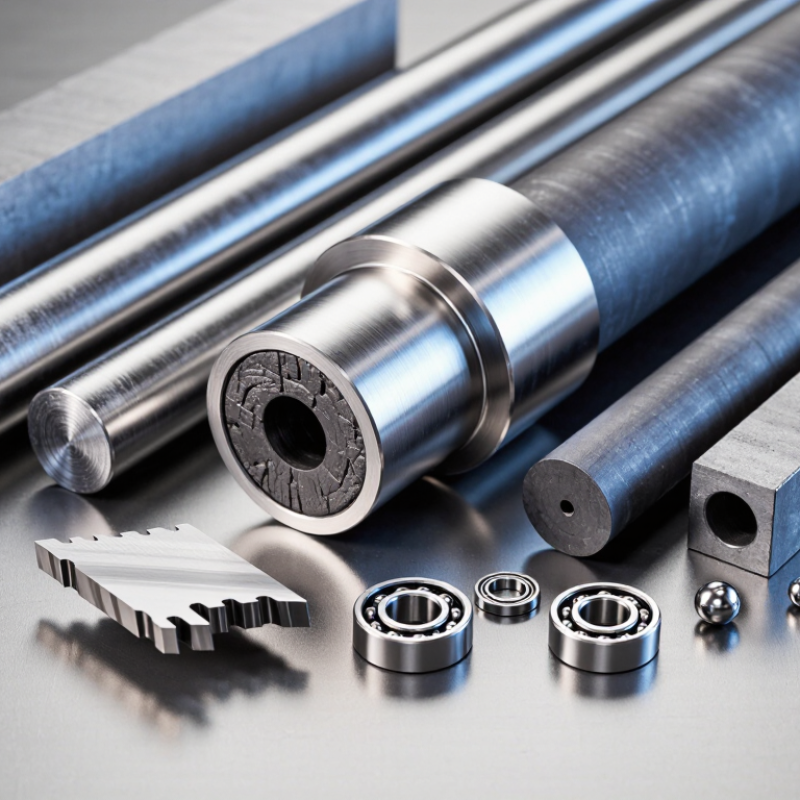
AISI/SAE grade numbers describe chemical composition, not a complete purchase specification. In 4140, the “41” family identifies chromium-molybdenum steel, while “40” roughly indicates its carbon content. SAE 4340 also contains nickel, chromium, and molybdenum, offering a different balance of strength and toughness. Grade 8620 is commonly chosen for carburized gears. These names help narrow choices, but they do not define every delivery condition. For a shaft, heat treatment can change hardness and machinability noticeably.
ASTM specifications address product form and testing requirements. ASTM A322 covers hot-wrought alloy steel bars, while ASTM A387 covers chromium-molybdenum pressure-vessel plate. A matching grade number alone is not enough. Check the specification, grade, dimensions, heat-treatment condition, and required tests on the material certificate. Details matter. Confirm the applicable specification revision for the intended product form.
Tips: Match the AISI/SAE chemistry to the ASTM specification before ordering. Confirm hardness and tensile requirements for the finished part, not just the raw stock. Ask how the steel was heat-treated. A “4140” label can still leave important questions unanswered.
ASTM A572 Grade 50 is a high-strength, low-alloy structural steel with a minimum yield strength of 345 MPa, or 50 ksi, when applicable product and thickness requirements are met. Yield strength marks the point where steel begins to deform permanently. It is not the same as tensile strength, which measures resistance to pulling apart. That distinction matters when engineers size beams, plates, and connections. A number on a specification sheet is useful, but it does not describe the whole component.
In fabrication, Grade 50 can help achieve required strength with less material than some lower-strength steels. That may reduce the weight of a frame or support. Check the material certificate and the governing specification, especially for thicker sections, because requirements can vary. Welding needs attention, too. The grade alone does not guarantee a suitable procedure; thickness, joint design, and service conditions all matter. On a cold shop floor, a clean, correctly prepared edge is more than a small detail. It supports consistent work. The 345 MPa figure can sound reassuring, perhaps too reassuring: corrosion resistance, fatigue performance, and stability still depend on design and exposure.
Cr-Mo Pressure-Pipe Steel: ASTM A335 P11 Contains 1.0–1.5% Chromium
For high-temperature piping, ASTM A335 Grade P11 combines chromium and molybdenum to support strength and oxidation resistance. Its specified chromium range is 1.0–1.5%, while molybdenum is 0.44–0.65%. These composition limits appear in ASTM A335/A335M and ASME BPVC Section II, Part A. The standards also specify minimum tensile strength of 415 MPa and yield strength of 205 MPa. P11 is commonly considered for pressure-pipe systems in power and process plants, but the operating conditions matter.
Chromium helps form a protective oxide layer; molybdenum contributes to high-temperature strength. Neither element makes P11 immune to creep, corrosion, or poor fabrication. A pipe’s performance depends on temperature, pressure, wall thickness, heat treatment, and welding quality. Check the applicable material certificate and verify chemistry and mechanical test results against the project specification. A small mismatch can matter. Composition alone cannot predict service life.
Tips: Confirm the grade marking and traceability before installation. Review the approved welding procedure and post-weld heat-treatment requirements. For a specific service, have a qualified materials engineer check the design conditions.
Specified chromium composition ranges by ASTM A335 grade, shown as weight percent.
ASTM A335 P11 contains 1.0–1.5% chromium. Higher-chromium grades shown here include P22, P5, P9, and P91. Ranges represent specification limits, not typical measured values.
AISI 4340 is a nickel-chromium-molybdenum engineering steel, valued when parts need strength and toughness after heat treatment. SAE J404 lists its nickel range as 1.65–2.00%, alongside chromium at 0.70–0.90% and molybdenum at 0.20–0.30%. Nickel helps support toughness, while chromium and molybdenum contribute to hardenability. Details matter. Chemistry alone does not guarantee a component’s performance.
ASM Handbook, Volume 1, describes alloy steels in relation to composition, processing, and properties; its guidance reinforces why heat treatment and section size matter. A large shaft may cool differently from a small test coupon, creating different hardness through its cross-section. ASTM A29/A29M sets general requirements for hot-wrought alloy-steel bars, but buyers still need to specify the required grade, condition, and testing. Not magic. A published tensile value is meaningful only when its specimen condition matches the intended part.
For a 4340 selection, verify the material certificate against the applicable chemical limits and confirm the heat-treatment route with the supplier. SAE J404 is a useful composition reference, while ASTM A29/A29M covers bar-product requirements. One practical caution: higher strength can reduce ductility, and machining or quenching can introduce problems if the process is poorly controlled. The nickel range is a starting point, not a performance promise.
In 2026, AISI D2 remains a common choice for dies, punches, and other tools exposed to abrasive wear. Its 11–13% chromium content supports hard carbide formation and strong wear resistance after suitable heat treatment. D2 is air-hardening, which can help limit distortion during hardening. Still, it is not stainless steel; moisture can stain or corrode its surface. That distinction matters.
AISI 52100 is a different kind of alloy steel. It contains about 1.3–1.6% chromium and is widely used for rolling bearings and other components under repeated contact stress. Its performance depends on more than chromium content. Clean steel, correct heat treatment, surface finish, and lubrication all affect fatigue life. Small defects can become important under repeated loading.
The two grades are not interchangeable. D2 favors wear resistance in cutting or forming tools, while 52100 suits rolling-contact applications. A shop choosing between them should consider the actual load, operating temperature, and finishing process. I would not call either grade universally superior. In practice, the best choice may be less obvious than a composition table suggests.
Typical chemical composition is shown in weight percent. Values are representative ranges; exact limits depend on the applicable material standard and product specification.
| Steel Type | Common Classification | Carbon (%) | Chromium (%) | Other Principal Alloying Elements (%) | Typical Properties and Uses |
|---|---|---|---|---|---|
| D2 | Cold-work tool steel | 1.40–1.60 | 11.00–13.00 | Molybdenum: 0.70–1.20; vanadium: 0.50–1.10 | High wear resistance and good hardenability; used for dies, punches, shear blades, and other cold-work tooling. |
| 52100 | High-carbon chromium bearing steel | 0.98–1.10 | 1.30–1.60 | Manganese: 0.25–0.45; silicon: 0.15–0.35 | Can achieve high hardness and rolling-contact fatigue resistance; commonly used for rolling-element bearings and precision wear parts. |
| A2 | Air-hardening cold-work tool steel | 0.95–1.05 | 4.75–5.50 | Molybdenum: 0.90–1.40; vanadium: 0.15–0.50 | Offers a balance of wear resistance, toughness, and dimensional stability; used for punches, dies, and forming tools. |
| O1 | Oil-hardening cold-work tool steel | 0.85–1.00 | 0.40–0.60 | Manganese: 1.00–1.40; tungsten: 0.40–0.60 | Provides good wear resistance and machinability in the annealed condition; used for cutting tools, gauges, and small dies. |
| M2 | High-speed tool steel | 0.78–0.88 | 3.75–4.50 | Tungsten: 5.50–6.75; molybdenum: 4.50–5.50; vanadium: 1.75–2.20 | Retains hardness at elevated cutting temperatures; used for drills, milling cutters, taps, and other high-speed cutting tools. |
WhatsApp us