Choosing the right Safety Hand Gloves is not a simple matter of ranking materials or brands. A mechanic facing sharp sheet metal needs different protection from a laboratory worker handling chemicals. The wrong glove can create false confidence. That risk deserves attention.
The U.S. Bureau of Labor Statistics’ Survey of Occupational Injuries and Illnesses repeatedly places hand and wrist injuries among common workplace injury locations. OSHA’s hand protection guidance also stresses hazard assessment before selecting gloves. These findings support a practical approach. Protection should match the task, exposure, and working environment. Cut resistance, puncture resistance, grip, dexterity, heat protection, and chemical compatibility all matter. So does proper sizing.
Standards provide useful evidence. ANSI/ISEA 105 evaluates cut, puncture, and abrasion performance in North America. EN 388 reports mechanical protection through tested performance levels. Neither standard proves that one glove suits every job. Testing conditions cannot perfectly reproduce wet steel, oily tools, cold storage rooms, or repeated eight-hour shifts. Real work is messier.
This guide examines ten widely used Safety Hand Gloves categories and explains where each performs best. It considers nitrile-coated gloves, leather gloves, cut-resistant models, chemical-resistant gloves, impact gloves, heat-resistant gloves, and other practical options. The selection reflects recognized standards, manufacturer testing, and workplace experience. Still, rankings remain partly subjective. A comfortable glove that workers actually wear may outperform a stronger glove left in a locker. That detail is easy to overlook. Good protection begins with honest hazard identification, routine inspection, and replacing damaged gloves before failure becomes visible.
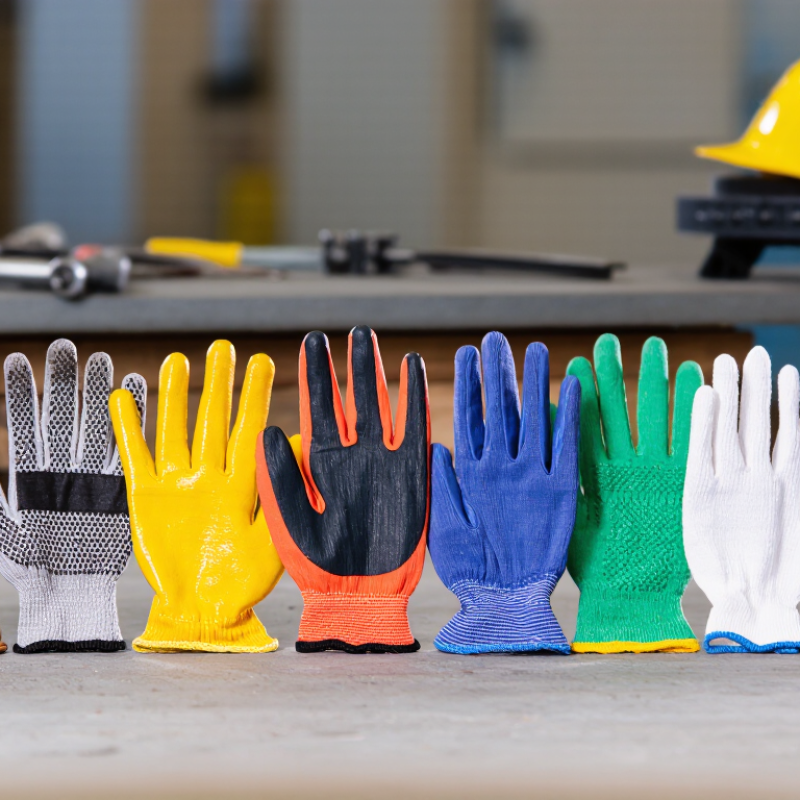
An effective safety glove matches a specific hazard, not a general idea of protection.
A thick glove may resist abrasion but reduce finger control. That can make handling small parts slower and less secure. Good selection begins with the task, material, temperature, force, and contact time. It should also consider grip when surfaces are oily, wet, dusty, or dry. Fit matters greatly. Loose cuffs can catch, while tight fingers cause early fatigue.
Look for clear performance information from reliable testing sources. Cut, puncture, abrasion, impact, chemical, and heat resistance are different properties. One rating does not prove complete protection. Check the glove’s technical data and compare it with the actual workplace risk. In practical inspections, seams, fingertips, and palm coatings often show damage first. Replace worn gloves promptly. Small tears can become serious gaps. Still, even careful selection is imperfect; workers may overlook changing conditions during a busy shift.
Tips:
Choose the glove after identifying the hazard. Check fit with natural hand movement. Test grip using the real tool, when safe. Inspect gloves before every use. Keep clean pairs available. Do not assume a thicker glove is safer. Train users to report discomfort, contamination, and visible damage. Record repeated failures, because they may reveal a poor design choice or an incomplete risk assessment. Safety improves when feedback changes the selection process.
What Are the Top 10 Safety Hand Gloves?
How Safety Gloves Are Classified by Workplace Hazards
Safety gloves should be selected by hazard, not by appearance or price. In workplace inspections, I have seen workers choose thick gloves for tasks requiring fingertip control. That choice often creates new risks. The main categories include cut-resistant, puncture-resistant, abrasion-resistant, impact-resistant, chemical-resistant, heat-resistant, cold-resistant, electrical-insulating, biological-barrier, and anti-vibration gloves.
Cut-resistant gloves help protect against blades, sheet metal, and sharp edges. Puncture-resistant designs suit needles, wires, and rough components. Abrasion-resistant gloves support repeated handling of concrete, timber, or metal. Impact gloves protect the knuckles during assembly and material movement. Chemical gloves must match the exact substance, concentration, temperature, and contact time. “Chemical-resistant” is never a complete answer.
Heat gloves may protect against hot surfaces, sparks, or molten materials, but these ratings are not interchangeable. Cold-weather gloves preserve dexterity during outdoor work and refrigerated operations. Electrical-insulating gloves require proper testing and inspection before use. Biological-barrier gloves reduce contact with fluids, but they do not remove every contamination risk. Anti-vibration gloves may reduce discomfort, although their performance depends on the tool and exposure pattern.
A glove can fail through a small tear, poor sizing, or contamination. Check seams, cuffs, grip, and certification markings before each shift. Replace damaged pairs immediately. I have also learned that workers sometimes remove gloves to work faster. That habit deserves honest review. The safest selection combines hazard assessment, task instructions, training, and real hand movement.
What Are the Top 10 Safety Hand Gloves?
The Top 10 Types of Safety Gloves and Their Uses
Safety gloves should match the hazard, task, and working environment. In workplace inspections, I check the glove material, fit, seams, and condition before use. Disposable nitrile gloves protect hands from oils, dirt, and light chemical splashes. Latex gloves offer excellent flexibility for cleaning and medical-style tasks, but latex sensitivity requires attention. Neoprene gloves handle selected acids, solvents, and wet work when chemical charts confirm compatibility. PVC gloves suit handling tasks involving moisture, oils, and mild abrasion.
Cut-resistant gloves help protect against blades, sheet metal, and sharp edges. Their protection depends on the tested cut level, not thickness alone. Impact-resistant gloves cushion knuckles during assembly, maintenance, and material handling. Leather gloves provide durable abrasion protection for construction and general handling. They are not reliable barriers against chemicals.
Heat-resistant gloves support work near hot tools, ovens, and heated components. Their rating must match contact temperature and exposure time. Electrical insulating rubber gloves are designed for electrical tasks and require approved testing, correct class, and careful inspection. They must remain clean and dry.
Fit matters. A loose glove may catch on moving equipment, while a tight glove can reduce control. I have seen workers choose thicker gloves for confidence, then lose finger movement. That choice needs reconsideration. Always follow the manufacturer’s test data, workplace risk assessment, and replacement schedule. A damaged glove offers little protection. Proper training matters too.
| No. | Glove Type | Typical Materials | Primary Protection | Common Uses | Important Limitations | Relevant Standards or Ratings |
|---|---|---|---|---|---|---|
| 1 | Nitrile Disposable Gloves | Nitrile rubber | Light chemical splashes, biological contaminants, oils and dirt | Healthcare, laboratories, food handling, cleaning and automotive servicing | Limited resistance to strong chemicals, punctures, high heat and heavy mechanical work; breakthrough time varies by chemical. | Chemical resistance should be verified against EN ISO 374 or applicable chemical-resistance data. |
| 2 | Latex Gloves | Natural rubber latex | Good dexterity, grip and protection from many water-based contaminants | Medical examination, janitorial work, gardening and general handling | May cause latex allergy; offers limited protection against oils, solvents, sharp edges and high temperatures. | Select products according to the task, allergy controls and applicable EN or ASTM requirements. |
| 3 | Cut-Resistant Gloves | High-performance polyethylene, aramid, glass fiber or stainless-steel blends | Cuts and, depending on design, punctures and abrasion | Metal fabrication, glass handling, food preparation and sheet-metal work | Cut resistance does not necessarily protect against impact, heat, chemicals or needles; performance can decrease with wear. | ANSI/ISEA 105 and EN 388 cut-resistance ratings are commonly used. |
| 4 | Impact-Resistant Gloves | Knitted or synthetic shells with thermoplastic rubber or similar protective elements | Back-of-hand and finger impact, abrasion and some mechanical hazards | Construction, oil and gas work, mining, material handling and heavy maintenance | Protective elements may reduce dexterity; impact protection does not eliminate crush or pinch-point hazards. | Impact performance may be reported under ANSI/ISEA 138 or EN 388, depending on the product and market. |
| 5 | Heat-Resistant Gloves | Aramid, leather, aluminized fabrics, silicone or other heat-rated materials | Contact heat, radiant heat, convective heat and, for some designs, molten-metal splash | Welding, foundries, glass production, baking and high-temperature maintenance | Temperature limits vary significantly; not all heat-resistant gloves protect against flames, molten metal or chemicals. | EN 407 thermal-performance ratings are commonly referenced. |
| 6 | Cold-Resistant Gloves | Insulating textile liners, wool blends, synthetic insulation, leather or coated fabrics | Cold contact, convective cold, wind and moisture, depending on construction | Cold storage, winter construction, outdoor utilities and refrigerated transport | Bulkier designs can reduce dexterity; insulation may become less effective when wet or compressed. | EN 511 is used to assess protection against convective and contact cold. |
| 7 | Chemical-Resistant Gloves | Butyl rubber, neoprene, PVC, nitrile, natural rubber or laminated barrier films | Permeation, degradation and splashes from selected chemicals | Chemical processing, laboratory work, industrial cleaning and agricultural applications | No glove protects against every chemical; permeation time, concentration, temperature and exposure duration must be evaluated. | EN ISO 374 and manufacturer chemical-permeation data should guide selection. |
| 8 | Welding Gloves | Leather, lined leather and heat-resistant textiles | Sparks, spatter, heat, abrasion and brief contact with hot materials | MIG, TIG and stick welding, metal fabrication and hot-work operations | Not designed for electrical shock protection; glove type must match welding method and required dexterity. | EN 12477 is a commonly referenced standard for protective gloves for welders. |
| 9 | Anti-Vibration Gloves | Knitted or synthetic shells with elastomer or gel padding | Some hand-arm vibration and mechanical shock from selected tools | Pneumatic tools, grinders, sanders and construction equipment | They cannot eliminate vibration exposure; effectiveness depends on tool frequency, grip force and work practices. | Vibration attenuation should be assessed using applicable test data rather than relying only on product labels. |
| 10 | Electrical-Insulating Gloves | Specially manufactured insulating rubber | Electrical shock from energized systems within the glove's rated voltage class | Electrical installation, utility maintenance and approved energized-work procedures | Requires correct voltage class, inspection, air testing, storage and periodic electrical testing; leather protectors are generally worn over rubber insulating gloves. | ASTM D120 and EN 60903 are commonly used standards, depending on jurisdiction. |
Selection note: Choose gloves based on the specific hazard assessment, exposure time, chemical or temperature data, required dexterity and applicable workplace regulations. No single glove type provides protection against every hazard.
What Are the Top 10 Safety Hand Gloves?
Choosing among the top ten safety glove types requires more than checking a cut-resistance label. OSHA guidance recommends matching glove performance to the actual hazard, task, and exposure. I compare cut-resistant, puncture-resistant, impact, chemical-resistant, heat-resistant, leather, coated, disposable, anti-vibration, and electrically insulating designs. Each solves a different problem.
Protection comes first.
The ANSI/ISEA 105 standard rates cut resistance from A1 to A9. Higher ratings indicate stronger resistance, but they can reduce flexibility. The EN 388 standard also measures abrasion, puncture, tear, and cutting performance. A glove with excellent test results may still fail during detailed assembly if fingertips feel bulky. That is an uncomfortable truth.
Comfort affects real use. A sweaty palm encourages removal, while poor sizing creates loose fingertips and snagging risks. Check dexterity by gripping a small bolt, opening a valve, or handling a sharp-edged panel. Industry field studies often identify poor fit and improper selection as recurring causes of weak glove compliance. The U.S. Bureau of Labor Statistics continues to list hand and wrist injuries among major occupational injury categories requiring days away from work.
Durability should be tested against the work rhythm. Inspect palm coating, seams, cuffs, and hardened contact areas after each shift. Replace gloves when coating cracks or fibers flatten. Ratings are useful, not magic. Dust, oils, washing, and repeated flexing can change performance faster than expected. One overlooked detail can matter most: workers must be willing to keep wearing the gloves.
What Are the Top 10 Safety Hand Gloves?
Choosing safety gloves starts with the task, not the glove cabinet. OSHA’s hand-protection standard, 29 CFR 1910.138, requires employers to assess cuts, punctures, burns, chemicals, and harmful temperatures. The U.S. Bureau of Labor Statistics reported 2.6 million nonfatal workplace injuries in private industry in 2023. Hand protection cannot remove every risk, but correct selection can reduce exposure.
The ten practical glove categories include general handling, cut-resistant, puncture-resistant, impact-resistant, chemical-resistant, heat-resistant, cold-resistant, electrical-insulating, anti-vibration, and precision gloves. Cut-resistant gloves suit sheet metal and glass, while chemical gloves require compatibility checks against the exact substance. Impact gloves help around tools, but they may limit dexterity. A thicker glove can feel safer. Sometimes, it increases handling errors. I have seen workers choose protection by appearance alone, which is a poor habit. Check the manufacturer’s test rating, glove length, cuff seal, and size before use. EN 388 and ANSI/ISEA 105 ratings provide useful performance information, but they do not replace a workplace risk assessment.
Tips: Match the glove to the dominant hazard. Test grip with dry and wet materials. Replace torn, swollen, contaminated, or hardened gloves immediately. Do not use chemical gloves beyond their stated breakthrough time. Fit matters more than many people expect. Leave room for movement, but avoid loose fingertips near rotating equipment. Document the selection and review it after near misses; that step is often forgotten.
How to Choose the Right Safety Gloves for Each Task
The chart compares common safety glove types by the number of major workplace hazards they are typically designed to address. Selection should always be based on the specific hazard assessment, required standards, chemical compatibility, fit, dexterity, and manufacturer test data. No single glove protects against every hazard.
WhatsApp us