
China Top 10 Night Vision Goggles Manufacturers?
Choosing among China’s leading Night Vision Goggles manufacturers takes more than comparing bright product photos. Real performance depends on the sensor, lens, display, housing, and the conditions where the device will be used. A clear image in a showroom can look different under a moonless sky, near streetlights, or in damp air. Small details matter.
Optical-systems consultant Dr. Elena Marlowe sums up the trade-off: “A useful night image is not just bright; it must preserve detail without hiding the limits.” This practical reminder frames the comparison. Buyers should examine specifications, production capabilities, quality controls, warranty terms, and available technical support. They should also ask how performance was tested. Numbers without test conditions can mislead.
This overview of China’s top 10 manufacturers is designed to help readers compare suppliers with care. It considers product range, technical focus, customization, and evidence of manufacturing experience. Some companies may excel in compact monoculars, while others focus on binocular systems or integrated imaging solutions. Those differences matter.
Not every listing will fit every application. A low price is not proof of poor quality, and a polished website is not proof of dependable production. Verify claims directly. Request current specifications and, where practical, evaluate samples under relevant conditions. The ranking is a starting point, not a substitute for due diligence. Manufacturers change; product details do too.
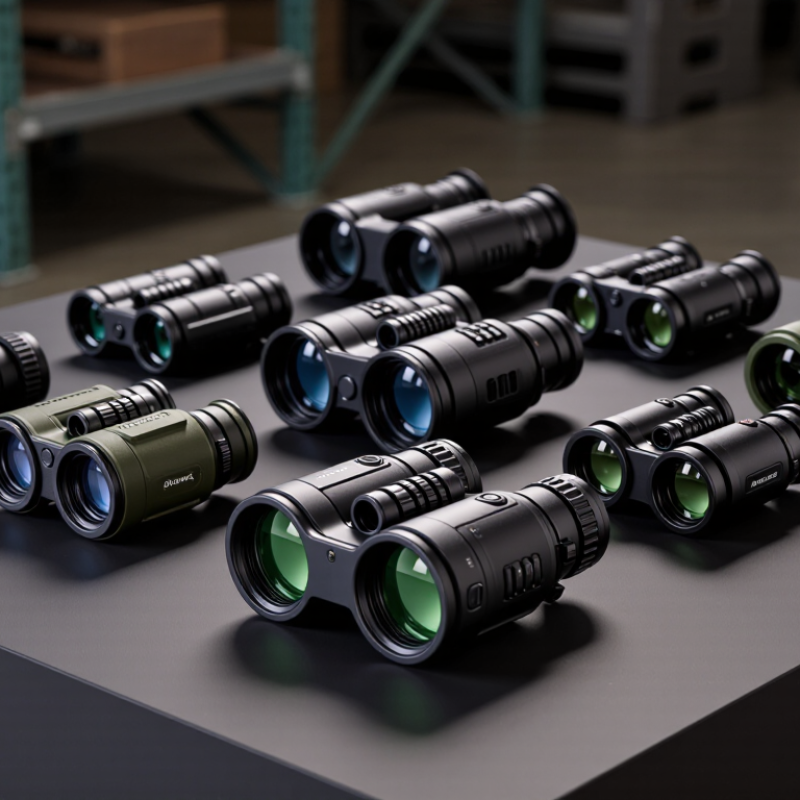
What Night Vision Goggles Are and How They Work
Night vision goggles make dim scenes visible by collecting scarce light rather than creating daylight. In image-intensification systems, an objective lens gathers photons from moonlight, starlight, or nearby lamps. A photocathode converts them into electrons, and a microchannel plate amplifies the signal. A phosphor screen turns it into a visible image, often green. The green display is a design choice, not the actual color of night. Not magic. Dirty lenses, fog, and sudden bright light can all reduce clarity.
Some goggles include an infrared illuminator, which provides nearby sensors with extra detail using light usually invisible to the human eye. Thermal devices work differently: they display variations in emitted heat instead of amplifying reflected light. The distinction matters. Glass, weather, and warm backgrounds can affect what appears on a thermal screen. U.S. Army night-vision technical materials describe image intensification as amplification of available light. MarketsandMarkets’ 2023 Night Vision Device Market report estimates a global market of USD 7.3 billion in 2023 and forecasts USD 10.3 billion by 2028. Those figures describe market growth, not equal performance across devices. It is easy to overlook how much visibility depends on conditions, sensor design, and careful handling.
China Top 10 Night Vision Goggles Manufacturers? - What Night Vision Goggles Are and How They Work
Technical reference table covering ten core technologies and design considerations; no company or brand rankings are included.
| No. | Technology or design area | Role in night vision goggles | How it works | Practical considerations |
|---|---|---|---|---|
| 1 | Objective lens | Collects available light and forms an image inside the device. | The lens focuses light from the scene onto the image intensifier’s photocathode or, in a digital system, onto an electronic image sensor. | Lens aperture, optical quality, and focus affect image brightness and clarity. |
| 2 | Photocathode | Converts incoming light into electrons in an image-intensifier system. | Photons striking the photocathode release electrons through the photoelectric effect. These electrons carry a pattern corresponding to the incoming image. | Performance depends on the photocathode design and the amount and wavelength of available light. |
| 3 | Microchannel plate (MCP) | Amplifies the electron signal in many image-intensifier tubes. | Electrons pass through tiny channels and trigger further electron emissions, multiplying the signal before it reaches the output screen. | Not every intensifier architecture uses an MCP; tube design and operating conditions influence gain and image characteristics. |
| 4 | Phosphor screen | Turns the amplified electron pattern back into visible light. | Electrons striking the screen cause phosphor material to emit light, producing a visible image for the viewer. | The phosphor type affects image color and appearance; color alone does not establish overall device performance. |
| 5 | Power supply | Provides operating voltage to the image-intensifier components or digital electronics. | Battery power is converted and regulated to meet the operating requirements of the tube, sensor, display, and control circuitry. | Runtime varies with battery type, temperature, device settings, and whether auxiliary illumination is used. |
| 6 | Eyepiece and diopter adjustment | Delivers the formed image to the user and allows viewing focus to be adjusted. | The eyepiece magnifies the internal image. Diopter adjustment compensates for differences in the user’s eyesight. | Correct adjustment improves viewing comfort but does not change the detail captured by the objective lens. |
| 7 | Infrared illuminator | Adds near-infrared light when ambient illumination is insufficient. | An infrared emitter illuminates nearby objects with light that may be difficult or impossible for the unaided human eye to see; a compatible night-vision device detects the reflected light. | It can help in very dark settings, but range is limited and the illumination may be detectable by other night-vision equipment. |
| 8 | Monocular and binocular configuration | Determines whether the device presents an image to one eye or both. | A monocular provides one viewing channel; a binocular arrangement provides two channels or presents an image to both eyes, depending on its design. | Weight, field of view, depth perception, and user preference vary by configuration and optical design. |
| 9 | Digital night vision sensor | Captures low-light scenes electronically in digital night-vision devices. | A CMOS or similar image sensor converts incoming light into electrical signals. Processing electronics then create an image for an electronic display. | Digital systems may support recording or display features, but image quality depends on the sensor, processing, optics, and available light. |
| 10 | Thermal imaging distinction | Detects thermal radiation rather than relying on reflected visible or near-infrared light. | A thermal sensor measures differences in infrared radiation emitted by objects and converts those differences into an image. | Thermal imaging is a separate imaging method, not image intensification; it can reveal heat contrast but does not show the same scene detail as visible-light imaging. |