How to Choose Security Blinds in 2026?
Choosing Security Blinds in 2026 requires more than comparing prices and product photographs. The right choice should balance protection, daylight, ventilation, privacy, appearance, and daily usability. A blind that feels secure but blocks every window may become frustrating after installation. Real-world experience matters here. Measure each opening carefully, observe how the room is used, and consider what happens during power cuts or equipment failure.
Modern Security Blinds may include reinforced aluminium slats, concealed guides, smart controls, manual overrides, and sensors. However, technology is not automatically reliability. Ask manufacturers about material thickness, locking points, maintenance needs, warranty coverage, and tested performance. Request clear installation details, not vague promises. A qualified installer should inspect the wall, window frame, fixing surface, and surrounding structure before recommending a system.
Small details matter.
Check how loudly the blind operates at night. Examine whether the bottom rail closes evenly on uneven floors. Confirm that controls remain accessible when lighting or internet services fail. Local building, fire, electrical, and accessibility requirements should also be reviewed with a qualified professional. Standards and product availability can vary by region, so online advice should never replace site-specific assessment.
There is no perfect solution for every property. A showroom sample may look excellent, yet perform differently in a windy, dusty, or frequently used location. Reflect on your priorities before buying. The best Security Blinds should offer dependable protection while still fitting the way people actually live and work. In 2026, careful questions, documented specifications, and professional installation remain more valuable than impressive marketing language.
Understanding Security Blind Types and Their Protection Levels
Security blinds differ mainly in construction and tested resistance.
Perforated steel blinds provide visibility and airflow, but their openings can weaken privacy. Solid steel or aluminum shutters create a stronger visual barrier and resist impact better. However, weight alone proves little. A heavy blind is not automatically secure.
Look for independently tested performance. EN 1627 resistance classes, from RC2 to RC6, measure resistance against increasingly capable forced-entry attempts. UL 972 evaluates rolling doors and shutters for burglary resistance. These tests examine the curtain, guides, locks, and mounting points. That matters because a strong curtain can still fail beside a weak side channel.
The FBI Crime Data Explorer recorded 847,522 burglaries in the United States during 2023. That figure supports practical risk planning, not panic buying.
Choose RC2-style protection for lower-risk storefronts and offices with ordinary tools. Higher-risk sites may need stronger interlocking slats, reinforced guides, and protected locking systems. Ask for the complete test certificate, not only a product rating. Check the installation substrate, too. Brick, concrete, and lightweight partitions behave differently. Security professionals should also inspect emergency release access, visibility, ventilation, and fire-egress requirements. The National Institute of Standards and Technology repeatedly emphasizes layered physical security, rather than relying on one barrier. I would not treat any rating as a guarantee; installation quality and daily operation can quietly reduce protection. A blind left partly open is still an open invitation.
Assessing Your Windows, Property, and Security Requirements
How to Choose Security Blinds in 2026?
Assessing Your Windows, Property, and Security Requirements
Start with the window, not the product catalogue. Walk around your property after dark. Note ground-floor glazing, hidden side windows, patio doors, and windows beside gates or bins. The FBI’s 2022 Crime Data Explorer recorded 847,522 burglary offenses in the United States. That figure supports careful planning, but it cannot predict your exact risk.
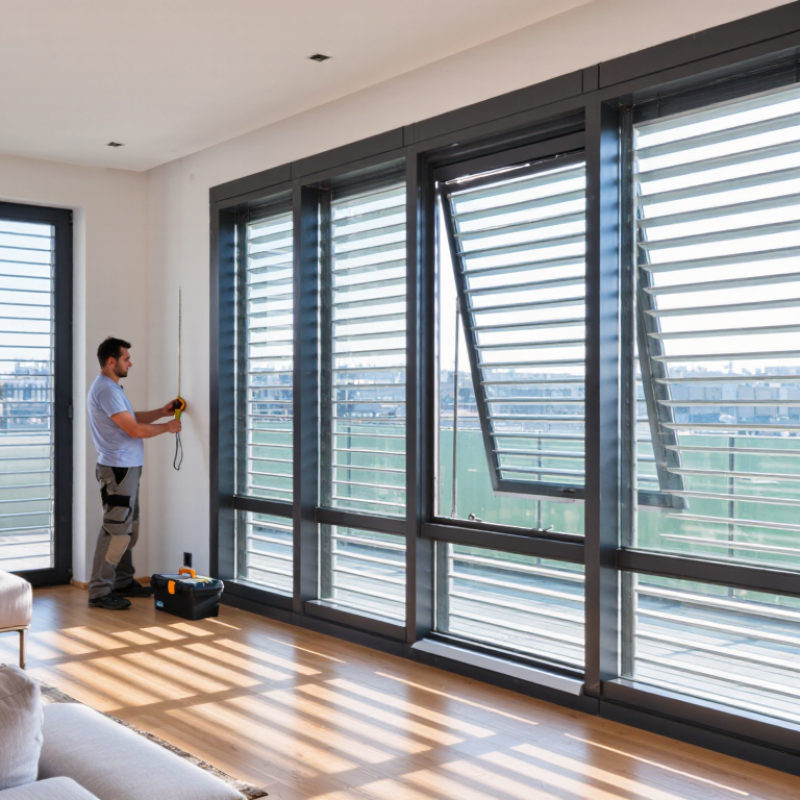
Examine the frame, wall condition, and available fixing points. A strong blind performs poorly when guides sit on weak masonry. Measure each opening separately, including irregular reveals and ventilation gaps. Consider visibility from nearby roads. A bright room behind an uncovered window can reveal valuables and household routines. Privacy matters too. Do not confuse a decorative blind with a tested security barrier.
Ask for documented resistance testing, durable locking hardware, and a manual override during power failure. Check whether the blind preserves emergency escape and daylight requirements under local building and fire rules. EN 1627 classifications can help compare resistance testing, while local authorities determine acceptable installation. The U.S. Bureau of Justice Statistics also notes that many crimes are never reported, so police figures understate household exposure. That is easy to forget. My practical mistake would be treating every window equally. A concealed kitchen window may deserve more attention than a visible front window. Recheck the plan after furniture, lighting, landscaping, and family routines change.
How to Choose Security Blinds in 2026?
Assess your windows, property, and security requirements by comparing the attack-resistance test times defined by EN 1627 resistance classes.
Higher resistance classes require longer standardized manual attack tests and progressively stronger tools.
RC2 is commonly considered for basic residential protection, while RC3–RC6 may be more suitable for exposed,
high-value, or higher-risk properties. Always verify the complete window-and-blind assembly certification,
installation quality, emergency egress requirements, and applicable local building regulations.
Data source: EN 1627 classification framework; attack times shown are standardized test durations, not a guarantee of real-world delay.
Comparing Materials, Construction, and Resistance Features
How to Choose Security Blinds in 2026?
Security blind selection should begin with construction, not appearance.
The FBI Crime Data Explorer reported 847,522 burglary offenses in the United States in 2023. That figure supports a practical question: how much delay can the blind create?
Aluminum offers low weight and strong corrosion resistance, while steel usually provides greater impact strength. However, thicker metal is not automatically safer. A weak guide rail can fail before the slats do.
Look for reinforced side channels, locked bottom rails, tamper-resistant fasteners, and a compact, protected housing. Small details matter.
I have seen attractive installations with exposed screws and flexible tracks. They looked secure, but the weak points were obvious.
Resistance testing gives better evidence than marketing language. EN 1627 classifies doors, windows, and shutters through resistance classes, while EN 1628 and EN 1630 assess static and dynamic loading.
Ask for the exact tested configuration, including the blind, guides, lock, and fixing surface. A certificate for one assembly may not cover another.
The U.S. Department of Justice’s National Crime Victimization Survey also shows that household burglary risks vary by property type and access conditions, so installation deserves equal attention.
Choose laminated or perforated designs when visibility and daylight matter, but inspect how those openings affect leverage resistance. Performance can be imperfect. Your wall may be the real weakness.
Checking Installation Quality, Maintenance Needs, and Overall Value
Choosing security blinds in 2026 requires more than comparing prices. Installation quality often determines real protection. The blind should sit squarely, move without scraping, and attach to structural framing. Ask the installer to show anchor locations. Test the blind at least three times before signing off. Loose guides and uneven gaps can become expensive problems later.
The U.S. Department of Energy estimates that windows may account for 25% to 30% of household heating and cooling energy use. Properly fitted blinds can support better indoor temperature control. However, performance depends on accurate measurements and suitable materials. The U.S. Consumer Product Safety Commission also reports serious risks from accessible window-covering cords. Choose cordless or safety-designed controls where children are present. A high purchase price does not guarantee better value. Check warranty coverage, replacement parts, repair response, and expected service life. The imperfect truth is simple: cheap installation can cancel out an expensive blind.
Tips: Request a written installation checklist. Inspect screws, side channels, locks, and control tension. Clean tracks with a soft brush every few months. Remove dust before it hardens. Use only approved lubricant. Arrange a professional inspection yearly, especially after storms or repeated daily use. Keep the invoice, measurements, and maintenance records. These documents help reveal whether a future repair is reasonable or avoidable.