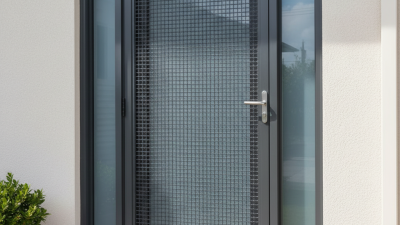
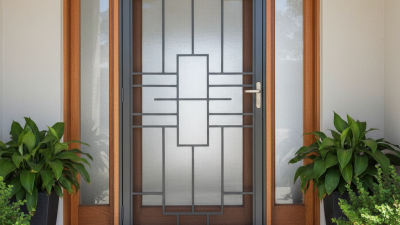
Choosing the right Security Screen Doors involves more than comparing prices or attractive finishes. A well-designed door should protect your home while allowing fresh air, natural light, and daily convenience. It must also suit the entrance, climate, household routines, and level of security required.
During a home improvement assessment, I have seen strong-looking doors fail because their frames were poorly fitted. Small gaps around the edges can reduce both security and weather resistance. Look closely at the frame, hinges, locks, mesh strength, and installation quality. Every component matters.
Material choice deserves careful attention. Stainless steel mesh can provide durable protection and clear visibility, while aluminium may offer a lighter and more affordable option. The best choice depends on exposure to salt air, rainfall, sunlight, and regular use. Do not trust appearance alone. Test the latch, inspect the corners, and ask how the product performs after years of opening and closing.
Certification and professional installation can add confidence, but they should not replace practical judgment. Standards differ by region, and product claims may sound stronger than the evidence behind them. Ask for clear specifications, warranty terms, maintenance instructions, and installer experience. A door that looks impressive in a showroom may feel inconvenient at home.
Think about real life.
This guide explains how to compare Security Screen Doors with greater confidence. It also considers common weaknesses, overlooked details, and the compromises that homeowners often discover only after installation. No door is perfect, but a careful decision can provide reliable protection without sacrificing comfort or appearance.
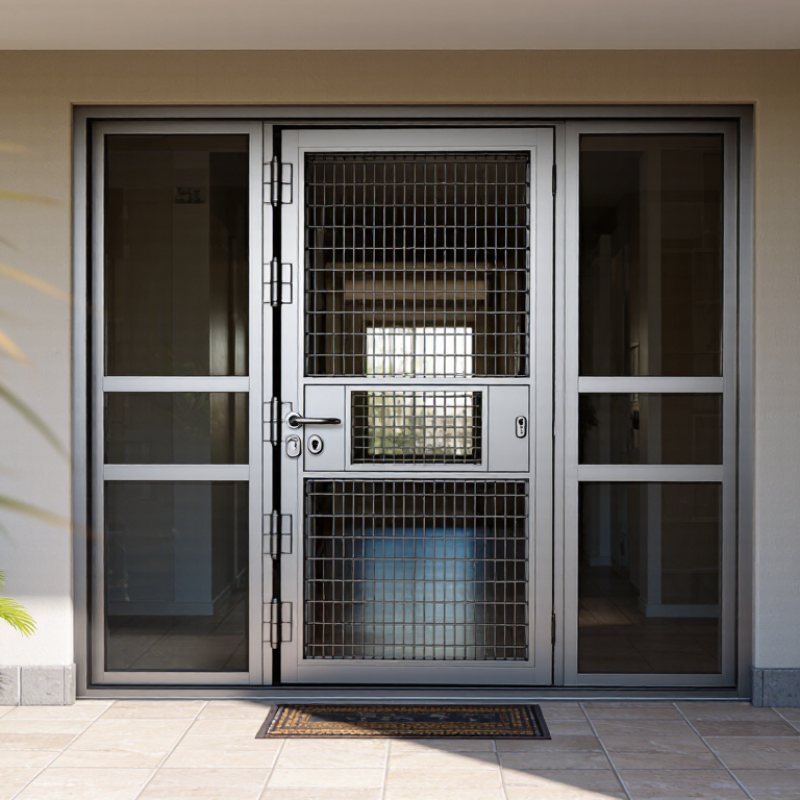
Security screen doors are secondary exterior doors built for ventilation, visibility, and resistance to forced entry. They usually combine a rigid metal frame, security mesh, reinforced hinges, and a lockable hardware set. Unlike ordinary insect screens, the mesh is designed to resist cutting and impact. The frame also matters. Strong mesh can still fail if shallow screws hold it only to weak trim. A properly installed door transfers force through the frame and anchors into the surrounding wall.
The FBI’s 2023 Crime Data Explorer estimated 847,522 burglary offenses in the United States. That figure does not prove a security screen door prevents burglary. It does show why entry-point resistance deserves practical attention. Look for independently tested products, clear test methods, and installation instructions aligned with recognized standards, such as Australia’s AS 5039 and AS 5041. Ask whether testing covered impact, lock strength, hinge resistance, and mesh cutting. Vague claims are not evidence.
In daily use, the best design should close firmly without dragging. Check the latch from inside and outside. Test it with the door slightly misaligned, because homes move and hardware loosens. Stainless-steel or corrosion-resistant components suit coastal areas. Visibility also matters; a dense mesh may improve resistance but reduce airflow and daylight. I would not trust a heavy appearance alone. The installation quality may matter more than the showroom sample. A door can look formidable and still leave a gap at the threshold.
Choosing a security screen door starts with the frame, not the mesh. Steel offers strong resistance, while aluminum resists corrosion and weighs less. Look for welded joints, reinforced corners, and hinges protected from outside access. The FBI’s 2023 Crime Data Explorer recorded 847,522 reported burglary offenses in the United States. That figure supports careful entry-point planning, but it cannot predict every home’s risk.
Mesh design matters. Expanded metal provides a rigid barrier, while woven stainless-steel mesh improves airflow and visibility. Choose a tamper-resistant lock with a protected cylinder and a three-point locking system. Confirm that the complete door assembly has been independently tested. ASTM F1233 addresses security glazing and systems, while Australia’s AS 5039 covers security screen doors and grilles. Standards differ, so a certificate should clearly identify the tested model and configuration. A heavy door is not automatically safer. Poor installation can leave a narrow gap near the latch.
Tips: Measure the opening twice, including the sill and hinge side. Ask for impact, pry, corrosion, and lock-cycle test results. Check whether the installer anchors the frame into structural material, not only trim. The U.S. Department of Justice’s National Crime Victimization Survey also shows that household security decisions should consider attempted, not only completed, incidents. Still, statistics have limits. A premium mesh may fail when the frame flexes, and a strong lock may underperform with weak screws. Examine the whole system, then question what the test did not measure.
Compare common door materials and security features using a normalized engineering index from 1 to 10. Higher scores indicate stronger expected performance in that category. Actual results depend on frame construction, mesh thickness, fixing methods, installation quality, and local conditions.
Stainless steel mesh generally provides excellent corrosion resistance and visibility, while welded steel offers high impact resistance. Aluminum is lightweight and naturally corrosion resistant, but it usually requires reinforced frames, tamper-resistant fasteners, and quality multi-point locks for higher security.
Begin with the doorway, not the door catalogue. Measure the opening at the top, middle, and bottom. Older frames often shift slightly over time. Check the sill for uneven surfaces, loose tiles, or water marks. A secure screen door needs a square frame and enough clearance to swing freely.
One detail is easy to miss. Observe how the door opens during daily use. Does it block a hallway, collide with furniture, or interfere with an existing lock? Photograph the hinges, threshold, and surrounding trim before ordering. I have seen small measurement errors create expensive fitting problems. Recheck everything.
Climate should guide the material and mesh selection. Coastal air can accelerate corrosion, while dry heat may affect seals and frame movement. In wet regions, drainage and ventilation deserve close attention. A fine mesh improves insect control, but it can reduce airflow and visibility. A heavier mesh may offer better resistance, yet it can feel darker indoors. The right balance depends on household habits.
Installation quality matters as much as the product itself. The frame should be anchored into sound structural material, not weak trim alone. Fasteners must suit the wall and frame construction. Follow the installation instructions carefully, and ask a qualified installer to inspect unusual openings. Local building requirements may also affect emergency access, locking hardware, and door swing. Small mistakes remain visible every day.
How to Choose the Best Security Screen Doors?
A strong security screen door should balance protection with daily comfort. Compare locks by cylinder quality, deadbolt throw, and resistance to forced entry. ANSI/BHMA grading offers a useful testing reference, although a high grade cannot fix poor installation. The FBI’s 2023 Crime Data Explorer reported that burglary offenses declined 7.6% from 2022, but local risks still vary widely. Ask an installer about frame anchoring, hinge protection, and the wall structure. Small details matter.
Ventilation and visibility deserve equal attention. A tightly woven mesh may improve resistance, yet it can reduce airflow and make a hallway feel dark. The U.S. Department of Energy recommends natural ventilation when outdoor conditions are suitable, especially during cooler periods. Choose mesh with an open area suited to your climate, then test airflow with the door closed. Visibility should work both ways: you should see visitors clearly, while strangers should not gain an easy view inside. That balance is often overlooked.
Maintenance is less dramatic, but more practical. Check hinges, fasteners, seals, and lock alignment every six months. Dust can make a lock feel defective. It may not be. The manufacturer’s care instructions should specify cleaning methods and corrosion limits, especially near the coast. I would avoid judging a door from a showroom push alone. Real performance depends on fitting quality, daily use, and whether someone will actually maintain it. A perfect specification can still fail through neglect.
Choosing the best security screen door starts with a reliable brand, not a color chart. Look for a manufacturer with a clear address, responsive support, and detailed product information. A trustworthy company should explain the frame material, mesh construction, lock type, and installation method. Vague descriptions deserve caution.
Ask for independent test reports when available. These may cover impact resistance, corrosion performance, ventilation, or lock durability. Check whether the reports identify the exact model you are considering. A certificate for another product proves very little. I also inspect the frame corners and hinge area carefully. Weak joints, uneven welds, or loose hardware often reveal poor manufacturing.
Do not judge quality from photographs alone. Request close-up images and a sample, if possible. The mesh should sit tightly inside the frame, without sharp edges or visible gaps. Hinges should move smoothly, while the lock should engage without forcing the door. Measure the opening twice before ordering. I once trusted a contractor’s first measurement and paid for a poor fit. That mistake was avoidable. It reminded me to verify width, height, squareness, and threshold depth independently. Review the warranty for exclusions, maintenance duties, and response times. A long warranty sounds impressive, but slow service can make it less useful. Installation instructions should be specific, illustrated, and suitable for your wall type.
| Evaluation Dimension | Quality Indicators to Look For | How to Verify Product Quality | Useful Reference or Benchmark | Potential Warning Signs |
|---|---|---|---|---|
| Security Testing | A complete test report for the exact door model, frame, lock, hinges, and installation configuration. | Request the full report, testing laboratory details, test date, model number, and pass/fail result. | EN 1627 resistance classes or another applicable local security-door standard. The standard must match the destination market. | Only a general certificate, an outdated document, or a certificate issued for a different product. |
| Frame Construction | A rigid, accurately welded or mechanically joined frame with reinforced corners and secure wall fixing points. | Check corner joints, frame deflection, screw locations, fixing depth, and whether the frame remains square after installation. | The frame should be designed for the door size, expected loads, and the surrounding wall structure. | Visible gaps at corners, thin unsupported sections, loose joints, or no documented fixing method. |
| Screen Mesh | High-tensile stainless-steel mesh or another tested security mesh with uniform openings and securely retained edges. | Inspect mesh weave, wire consistency, edge retention, cut resistance information, and the connection between mesh and frame. | Mesh performance should be supported by product-specific impact, cutting, or penetration test evidence. | Decorative mesh presented as security mesh, uneven openings, exposed sharp edges, or adhesive-only attachment. |
| Locking System | A multi-point locking system with a protected cylinder, reinforced lock case, and hardened or suitably strong strike plates. | Confirm the number and location of locking points, cylinder protection, key control, and compatibility with the door frame. | The lock should have documented performance for the intended application and be replaceable if maintenance is required. | A single basic latch, exposed cylinder, weak strike plate, or a lock that can be bypassed without damaging the door. |
| Hinges and Anti-Lift Protection | Heavy-duty hinges, hinge-side reinforcement, and fixed anti-lift pins or equivalent protection. | Open and close the door repeatedly, inspect hinge attachment points, and verify that the door cannot be lifted from the hinge side. | Hinge capacity should exceed the finished door weight with an appropriate safety margin. | Small exposed screws, flexible hinges, excessive movement, or no protection when the door opens outward. |
| Corrosion Resistance | Materials and finishes selected for the local climate, especially coastal, humid, or high-salt environments. | Ask for coating specifications, salt-spray or corrosion-test evidence where relevant, and maintenance instructions. | Stainless steel grades such as 304 or 316 are commonly specified according to exposure conditions; grade alone does not prove total corrosion performance. | Unprotected dissimilar metals, bubbling paint, rust at fasteners, or no guidance for coastal installation. |
| Finish and Coating | Even coverage, strong adhesion, protected edges, and a finish suitable for ultraviolet exposure and cleaning conditions. | Check for color uniformity, scratches, pinholes, peeling, sharp edges, and coating damage around drilled holes. | A recognized architectural coating specification may be relevant, but the stated rating must apply to the actual substrate and process. | Unclear coating type, no preparation details, visible defects, or claims of “weatherproof” without supporting data. |
| Glass and Infill Panels | If glazing is included, it should be safety-rated and retained by a secure, tamper-resistant system. | Verify the glass type, thickness, safety marking, bead design, and whether the test report covers the glazed configuration. | Applicable safety-glazing requirements depend on the country and building location. | Ordinary unmarked glass, removable glazing beads on the exterior, or no information about impact performance. |
| Installation Quality | A professional site measurement, suitable anchors, correct packers, accurate alignment, and a clear installation procedure. | Confirm that the installer records opening dimensions and checks door operation, latch engagement, and frame alignment after fixing. | Security performance applies only when the product is installed according to the tested or specified method. | Large unsealed gaps, too few anchors, reused weak fixings, misalignment, or installation without written instructions. |
| Ventilation and Visibility | The mesh provides airflow and visibility without compromising tested security performance. | Check the stated open area, mesh visibility, glare, privacy level, and whether added privacy layers affect ventilation. | Airflow and solar-performance values should be based on declared test methods rather than visual claims. | Very dense coverings that restrict airflow, unclear visibility claims, or modifications not included in the test configuration. |
| Documentation and Traceability | Clear technical drawings, installation instructions, material information, model numbers, and batch or serial traceability. | Compare the documents with the delivered product and retain invoices, certificates, drawings, and maintenance records. | Reliable suppliers can identify the exact product configuration and provide replacement-part information. | Documents use stock images, omit model numbers, contain inconsistent specifications, or cannot be independently checked. |
| Warranty and After-Sales Support | Written coverage for frame, mesh, hardware, finish, and installation, with stated exclusions and claim procedures. | Read the complete warranty and confirm the availability of locks, cylinders, hinges, mesh, and seals for future repairs. | Warranty duration is less important than clearly defined coverage, service responsibility, and spare-part availability. | Verbal promises only, broad exclusions, no service contact, or replacement parts that are not standard or identifiable. |
Note: Security ratings, building-code requirements, and acceptable materials vary by country and installation location. Always verify that the test evidence applies to the complete door assembly and the intended installation method.
WhatsApp us