A trade show booth can look impressive in a rendering and still strain a real team. Freight, storage, setup labor, and changing floor plans all affect the final cost. In 2026, choosing a Trade Show Booth Rental Alternative means comparing the full operating picture, not just the quoted booth price.
Exhibit strategist Candy Adams is a relevant voice on practical trade show planning. A useful paraphrase of her experience is: “Choose a booth your team can execute reliably, not merely one that looks impressive.” This is a paraphrase, not a verified verbatim quotation. That distinction matters when advice is used to guide a budget. Still, the principle is sound: a compact modular exhibit may suit a small crew, while a custom-built booth may justify its added work when brand details and repeated use matter.
Look closely at what each option includes. Ask who handles graphics, lighting, shipping crates, installation, and repairs. Check whether the components fit your next venue and whether storage is included. Get itemized estimates, then compare them across the same show schedule. Small details add up.
There is no universal winner. A rental alternative can reduce recurring costs, but only if the booth’s upkeep, transport, and setup fit your team’s capacity. A spreadsheet helps. So does an honest conversation with the people who will assemble the display. One weak assumption can distort the comparison. Decide with evidence, and leave room to revise the plan.
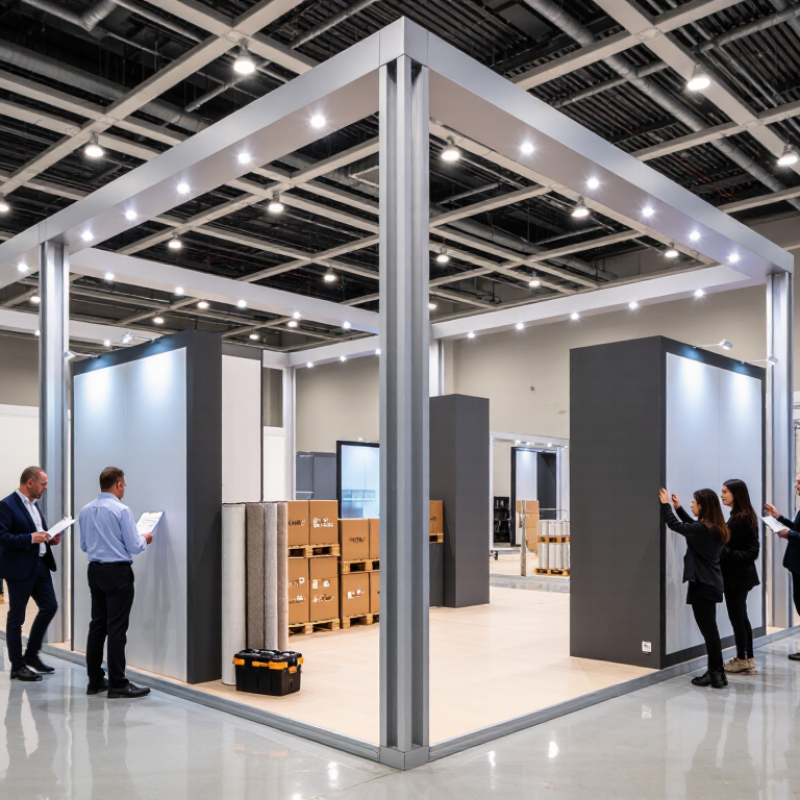
A trade show booth rental alternative is an exhibit setup that replaces renting a complete booth for each event. Instead of paying a new rental fee each time, a business may buy a reusable display, assemble a modular system, or use portable panels and branded graphics. Some exhibitors also keep booth components in-house and hire help only for transport or installation.
The right option depends on how often you exhibit, your storage space, and how much setup your team can manage. A lightweight display can work well for a small booth, while a modular structure may suit changing floor plans. Costs are not always lower: shipping, storage, repairs, and staff time can add up. A display that looked simple in a showroom may feel awkward to assemble under a tight schedule. That part is easy to underestimate.
Tips: Compare the full cost across several events, not just the purchase price. Ask for setup instructions, packed dimensions, and replacement-part details. If possible, test the display in your office before the show. A quick practice run can reveal missing tools, unclear labels, or graphics that do not align. It may not catch everything, but it helps.
Before comparing a trade show booth rental alternative, define what success should look like. Is your goal to book qualified meetings, demonstrate a product, or build awareness? Choose one primary outcome and a few practical measures, such as meeting requests or visitor conversations. Be specific. “More leads” is hard to evaluate; “20 useful conversations each day” gives your team a clearer target.
List the space, equipment, and staffing you actually need. A 10-by-10-foot booth with one demo screen may suit a small team, while larger displays can add shipping, setup, and labor costs. Price the full event, not just the booth: include graphics, furniture, freight, installation, electrical service, travel, and storage. Keep must-haves separate from nice-to-haves. Then set a firm spending limit and hold back a reserve for last-minute fees or replacement parts. Leave room. Your first estimate will probably be imperfect, and that is worth admitting early. I would rather trim an optional feature before signing than discover the budget cannot cover show-floor services. Ask each provider for an itemized estimate, clear delivery dates, and details about what happens if materials arrive damaged or late. A realistic goal and a visible budget make alternatives easier to compare.
Start with the space your goals require: a 10 × 10 ft booth provides 100 sq ft, a 10 × 20 ft booth provides 200 sq ft, and a 20 × 20 ft booth provides 400 sq ft. These areas are calculated from the listed dimensions; they are not rental-price estimates. Request comparable quotes for your chosen footprint and check what each rental package includes.
Compare booth formats by how they work on your actual show floor. A modular booth can adapt to different layouts, while a pop-up display is often lighter and simpler to transport. Inline spaces suit narrow footprints; island booths offer access from several sides but need more planning. Check storage needs, setup time, and whether the design leaves room for a counter, product samples, and clear visitor paths. A polished rendering is not proof that the space will feel comfortable.
Compare services line by line, not just by package name. Ask whether the quote includes graphic production, freight, installation, dismantling, electrical coordination, and on-site support. Confirm who handles revisions and when artwork must be approved. Request an itemized estimate with dates and exclusions. Small details matter. A low rental price can become less attractive when essential services are separate. I would also question any layout that looks impressive but blocks conversation or product access.
Tips: Measure your booth footprint and list must-have features before requesting quotes. Compare two or three format-and-service combinations using the same requirements. Ask what happens if delivery or setup runs late, and get the answer in writing. A little uncertainty is normal; leave room in your plan for it.
| Booth Format | Typical Footprint | Design and Customization | Commonly Available Services | Setup and Logistics | Best Suited For | Points to Confirm Before Booking |
|---|---|---|---|---|---|---|
| Portable Display Rental | Usually 10 × 10 ft; some layouts can extend to 10 × 20 ft | Standard frame or display system with replaceable graphic panels; fewer structural design options | Graphic production, shipping, basic setup instructions, and sometimes installation support | Generally compact and comparatively simple to transport; confirm whether installation labor is included | Small teams, first-time exhibitors, and events where a straightforward branded presence is sufficient | Graphic dimensions, display components included, delivery window, return shipping, and replacement costs for damaged items |
| Modular Rental Exhibit | Commonly 10 × 10 ft, 10 × 20 ft, or larger configurations | Reconfigurable components, with options such as shelves, counters, monitor mounts, and fabric or rigid graphics | Design support, graphics, equipment rental, freight coordination, installation, and dismantling may be offered | Components are assembled on site; labor, material handling, and venue-specific deadlines should be checked | Exhibitors seeking a more tailored appearance while retaining the flexibility to adjust layouts between events | Which components are included, whether the layout can be reused at another footprint, and charges for changes or additional labor |
| Custom Rental Exhibit | Flexible; often designed for larger inline, peninsula, or island spaces | High design flexibility, including custom-shaped structures, branded features, meeting areas, and integrated lighting | Concept design, fabrication or rental inventory coordination, graphics, project management, installation, and dismantling | Requires detailed planning and coordinated shipping and labor; venue rules and advance deadlines can affect the schedule | Brands with specific presentation requirements, larger spaces, or a need for a distinctive environment | Design revisions, engineering or approval requirements, material handling, utilities, storage, and the scope of on-site supervision |
| Hybrid Rental with Owned Graphics or Accessories | Varies; often built around a standard 10 × 10 ft or 10 × 20 ft rental structure | Rental structure combined with compatible exhibitor-owned graphics, furniture, or technology | Structure rental, graphic fitting, equipment coordination, and optional shipping or labor services | Can reduce the need to rent every component, but owned items must arrive on time and meet system specifications | Repeat exhibitors who already own reusable graphics, monitors, or branded accessories | Compatibility, graphic condition and dimensions, storage responsibility, shipping arrangements, and who handles installation |
| Rental Furniture and Equipment for a Basic Space | Uses the event-assigned booth footprint; the booth structure may be minimal or separately arranged | Limited structural customization; presentation relies on rented furniture, signage, lighting, and equipment | Furniture, monitors, accessories, and sometimes delivery and placement through event-approved channels | Often subject to venue ordering procedures, service deadlines, and designated delivery or collection times | Exhibitors needing a simple meeting or demonstration area, or supplementing an existing booth | What the space includes, approved suppliers, electrical needs, delivery and pickup fees, and whether setup is provided |
Comparison note: Footprints and service packages are common examples, not guaranteed inclusions. Rental inventory, pricing, labor, shipping, venue rules, and deadlines vary by event and provider; request an itemized proposal for the specific show.
How to Evaluate Providers, Quality, and Logistics
A low rental quote can hide costly gaps. Compare providers using the same booth size, layout, finish, and service checklist. Ask for scaled drawings, a materials list, and an itemized quote covering transport, setup, dismantling, and storage. CEIR’s 2023 Index reported 4.2% growth in the exhibition sector over 2022, while activity remained below 2019 levels. That uneven recovery is a reminder to check a provider’s capacity for your dates, not just its portfolio. Details matter.
Check quality beyond polished photos. Request a sample of the printed fabric or panel finish, confirm how graphics attach, and ask what happens if a component arrives damaged. Get references for events with similar booth dimensions and venues. Review the production schedule, delivery window, and named onsite contact. A beautiful rendering is not proof that the crates will arrive on time. One thing is easy to overlook: clarify who handles venue coordination and last-minute changes, in writing.
Tips: Ask for the delivery plan, install crew details, and a spare-parts policy before signing. Compare total costs, not headline rates. Freeman’s 2024 attendee research highlights the value of engaging in-person experiences, but an impressive design can still disappoint if lighting, access, or setup is poorly managed. I’d still leave a little room for uncertainty; venue rules and dock delays can upset even a careful plan.
Selecting a trade show booth rental alternative in 2026 means matching the option to your actual goals, not just its appearance. Start with the floor plan, expected visitor flow, and the products or demonstrations you need to show. A compact modular setup may suit a narrow space; a custom-built alternative may work better when equipment needs dedicated support. Measure twice. A beautiful rendering cannot fix a blocked aisle.
Ask suppliers for a scaled layout, itemized quote, and written schedule covering design approval, delivery, installation, and dismantling. Check what the price excludes, such as lighting, furniture, graphics, or on-site labor. Request recent project photos and confirm that the pictured materials and finishes are available for your event. Then compare total cost and practical fit, not headline price alone. Ask for proof.
Before confirming, verify venue dimensions and service access with the organizer, and share any power or weight requirements with the supplier. Clarify who handles last-minute changes and what happens if a component arrives damaged. A short video call can expose awkward details, like a screen facing away from the main aisle. Still, plans can change; leave room in the budget and timeline. It is easy to overvalue a polished concept and overlook setup time. Check the final drawings against the real floor plan before signing off.
WhatsApp us