Choosing a Solid Surface Counter Top is no longer only a style decision. It affects hygiene, maintenance, repairability, and long-term project value. Grand View Research reported that the global solid surface market was valued at approximately USD 3.1 billion in 2023. Its 2024–2030 analysis also forecasts steady growth, supported by residential renovation, commercial interiors, and new construction. The Freedonia Group’s countertops research similarly identifies remodeling activity and design flexibility as important market drivers.
Performance matters.
Solid surface materials are non-porous, seamless, and available in many colors and patterns. These qualities help create integrated sinks, curved edges, and visually continuous worktops. However, product quality varies. Resin composition, fabrication standards, warranty terms, and installer experience can change the final result significantly. A beautiful sample may still disappoint if seams are visible or heat protection is ignored.
Kitchen designer Susan Serra, CKD, has described the kitchen as “a living space, not simply a work space.” That perspective is useful here. A countertop must support chopping, cleaning, entertaining, and daily wear. It should also suit the room’s lighting and cabinet proportions. This introduction examines China’s top ten Solid Surface Counter Top manufacturers through those practical criteria, rather than relying on advertising claims alone. No ranking is perfect. Factory scale does not always equal better fabrication. Buyers should verify certifications, test reports, installation networks, and recent customer projects before making a decision.
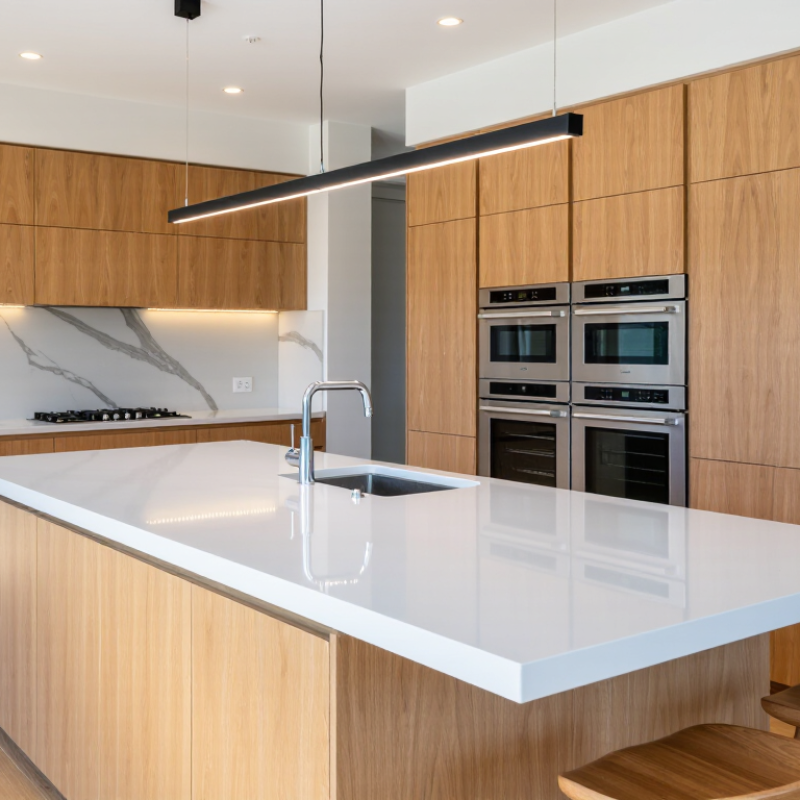
Solid surface countertops are engineered sheets made from mineral fillers and acrylic or polyester resins. The material is nonporous, homogeneous, and often available in 12-millimeter sheets. Fabricators can heat-form it around gentle curves and join pieces with nearly invisible seams. That makes it useful for kitchens, bathrooms, healthcare rooms, and reception desks. It is not the same as natural stone or engineered quartz. Scratches can often be sanded away, but deep burns may need professional repair.
Market evidence supports continued interest. Grand View Research reports that the global solid surface market is expected to grow steadily through the decade, driven by residential renovation and commercial construction. Freedonia’s countertop industry analysis also highlights hygiene, design flexibility, and repairability as important purchasing factors. However, market reports vary because some count sheets only, while others include fabrication and installation. The numbers deserve careful reading. Solid surface is durable, but it is not indestructible. A hot pan, sharp tool, or abrasive cleaner can still damage the finish.
Tips: Ask for the technical data sheet before comparing manufacturers. Check resin type, sheet thickness, fire performance, warranty terms, and indoor-air certifications. Request a seam sample under bright light. Inspect an edge detail, too. Good installation matters as much as the material. Leave expansion space near walls, and use heat protection beside cooktops. A practical mistake is choosing only by color; a pale matte surface may show fewer scratches than a dark glossy one.
China Top 10 Solid Surface Countertop Manufacturers?
How China’s Top Manufacturers Are Evaluated
Evaluating leading solid surface countertop manufacturers requires more than comparing catalog photos. A reliable assessment begins with factory experience, production control, and material testing. During a plant visit, buyers should inspect resin storage, mineral filler handling, sanding areas, and finished slab protection. Clean workspaces do not prove everything. They provide useful evidence.
Material consistency deserves close attention. Inspectors can compare several slabs from different production dates. They should check color variation, thickness tolerance, surface pores, and edge finishing under bright light. Samples can deceive. A small sample may hide warping or uneven curing. Independent tests should examine water absorption, stain resistance, heat response, and impact strength. Test reports need clear dates, methods, and sample numbers.
Professional manufacturers also maintain batch records and documented quality procedures. These records help trace defects back to raw materials or production shifts. Experienced exporters usually provide installation guidance, packaging standards, replacement policies, and realistic lead times. Communication matters too. Delayed answers may signal weak internal coordination. However, even strong factories can make occasional mistakes. A damaged corner or mismatched batch should trigger corrective action, not excuses. Buyers should review warranty terms carefully and request references from completed commercial or residential projects. Photographs are helpful, but direct project feedback is stronger evidence. Evaluations should remain evidence-based, repeatable, and open to revision.
China’s solid surface countertop sector includes large exporters, specialized fabricators, and smaller regional factories. The profiles below focus on production ability, material control, customization, and export experience. Manufacturer One is known for high-volume sheet production and automated polishing lines. Manufacturer Two focuses on hotel and commercial projects, where consistent color matching matters. Manufacturer Three supplies sinks, vanity tops, and integrated countertop systems. Its strength is practical design coordination.
Manufacturer Four serves residential developers with standard sizes and dependable lead times. Manufacturer Five emphasizes recycled mineral fillers and lower-waste cutting methods. Manufacturer Six operates a flexible workshop for curved edges, radiused corners, and custom cutouts. Manufacturer Seven combines sheet production with installation support for overseas buyers. Manufacturer Eight is recognized for detailed packaging, including foam protection and reinforced pallets.
Small details prevent expensive damage.
Manufacturer Nine targets premium interiors and offers distinctive textures, though buyers should request current sample batches. Manufacturer Ten supports private-label orders and can adjust thickness, finish, and color ranges. Factory visits, third-party testing, and batch samples remain important before signing a contract. Review fire performance, water absorption, stain resistance, and color stability under actual lighting. Ask for production records, inspection procedures, and clear tolerance limits. Some factories present impressive showrooms but provide limited technical evidence. That gap deserves attention. Rankings can also change as equipment, management, and export teams change. A careful buyer should compare recent projects, not only catalog photographs.
China’s top 10 solid surface manufacturers should be assessed by more than catalogue size. Their product range often includes acrylic sheets, polyester panels, integrated sinks, vanity tops, shower walls, and custom reception counters. Acrylic systems usually offer better thermoforming and seamless repairs. Polyester systems can provide lower initial costs, but may show different color stability. Mineral fillers, commonly alumina trihydrate, improve hardness and visual depth.
Grand View Research’s 2024 market assessment indicates roughly 5% annual growth for the global solid surface market through 2030. This trend increases demand for stable thickness, repeatable colors, and faster custom fabrication. Strong factories operate casting, curing, sanding, CNC cutting, thermoforming, and edge polishing lines. A 12-millimeter sheet should remain consistent across its length. Small variations can complicate joint work.
Certifications deserve close checking. ISO 9001 supports documented quality control, while ISO 14001 indicates a structured environmental management system. GREENGUARD Gold can support low-emission claims for interior applications. NSF/ANSI 51 is relevant when surfaces contact food equipment. Factory laboratories should also record water absorption, flexural strength, impact resistance, and color variation. Ask for recent batch reports, not only certificates.
Production capacity can look impressive on paper. It still needs verification. Suppliers should provide sample panels, inspection photos, curing records, and realistic lead times. Some manufacturers remain capable but imperfect, especially with unusual colors or small orders. That limitation matters.
China’s top 10 solid surface countertop manufacturers may differ in equipment, quality control, and export experience. Choosing the right supplier requires more than comparing quotations. Grand View Research estimated the global solid surface market at approximately US$2.6 billion in 2023, with continued growth expected through 2030. This expansion attracts new factories, but capacity alone does not prove reliability.
Request recent project samples, production videos, and a factory audit before signing. Check whether the manufacturer controls resin mixing, pigment consistency, curing temperature, and sheet thickness in-house. Ask for inspection records, batch numbers, and test results. Useful benchmarks include ASTM and EN performance requirements for stain resistance, water absorption, flexural strength, and heat resistance. An ISO 9001 certificate helps, but it cannot replace physical inspection. I have seen polished samples hide uneven backsides and weak seams.
Confirm the full specification in writing. Include dimensions, thickness tolerance, color variation, edge profiles, packaging, replacement terms, and inspection procedures. Independent pre-shipment inspection is worth considering for large orders.
The International Organization for Standardization reported more than 1.2 million valid ISO 9001 certificates worldwide in its 2023 survey, so certification is common, not exclusive. Ask how the factory applies it daily.
A cheaper offer may reflect lower resin content, thinner sheets, or limited quality checks. I would compare landed cost, not factory price. One overlooked detail can damage an entire installation.
WhatsApp us