10 Best Tower Clamp Manufacturers for Global Buyers?
Choosing a dependable Tower Clamp manufacturer is not a simple price comparison. Global buyers need evidence, consistency, and practical field experience.
A clamp may look small, yet it can support antenna mounts, cable systems, or tower accessories under constant wind pressure. David Mercer, an independent tower-hardware consultant with more than two decades of installation experience, says, “A reliable clamp begins with accurate steel, but ends with verified performance in the field.” His observation is worth remembering. Good appearance alone proves very little.
This guide examines ten Tower Clamp manufacturers serving international markets. It considers material quality, galvanization, bolt strength, dimensional accuracy, load documentation, and production capacity. It also reviews testing practices, packaging, customization, delivery reliability, and technical support. A galvanized clamp should arrive with an even coating, clean threads, and no sharp burrs. Small defects can become frustrating delays on a remote tower site.
Details matter.
The manufacturers discussed here are not judged only by catalog claims. Their certifications, traceability systems, customer feedback, and response to technical questions also deserve attention. Some suppliers may offer excellent engineering but slower communication. Others may deliver quickly while providing limited documentation. No ranking is perfect, and buyer priorities differ across regions. That is why this overview should support careful comparison rather than replace project-specific engineering review. Before ordering, confirm tower dimensions, corrosion exposure, required loads, applicable standards, and installation conditions. A thoughtful purchase reduces rework, protects equipment, and supports safer long-term maintenance.
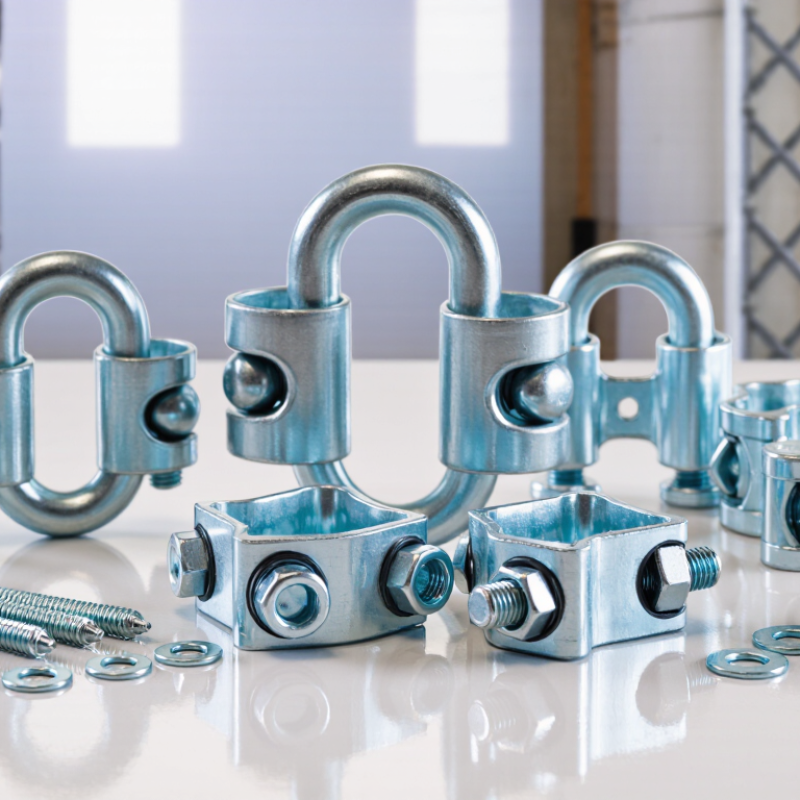
What Tower Clamps Are and Why Global Buyers Need Them
Tower clamps are mechanical fittings used to secure cables, pipes, antennas, ladders, and support members on tower structures.
They usually include U-bolts, mounting plates, threaded fasteners, or adjustable jaws.
Their design transfers holding force around a steel tube or angle section without requiring extensive drilling.
Fit matters.
For global buyers, tower clamps support new construction, equipment upgrades, and routine maintenance.
A telecommunications tower may need clamps for feeder cables and antenna brackets.
A lighting tower may require them for conduit or inspection accessories.
Proper clamps reduce movement caused by wind and vibration.
They also simplify installation when access is limited.
Material selection requires practical judgment.
Hot-dip galvanized steel suits many outdoor environments, while stainless steel may perform better near saltwater.
Buyers should verify pipe diameter, tower geometry, load capacity, bolt grade, coating thickness, and tightening torque.
A lower price can hide poor threads or uneven plating. Not always.
Requesting drawings, inspection records, and batch traceability improves purchasing reliability.
Samples should be checked for fit before a large shipment leaves the factory.
Local engineering requirements and qualified inspections still matter, because one clamp cannot suit every tower design.
Corrosion, temperature changes, and installation errors may affect service life.
Suppliers should provide clear measurements and realistic performance data, not vague promises.
10 Leading Tower Clamp Manufacturers for International Buyers
Choosing among 10 leading tower clamp manufacturers for international buyers requires more than comparing prices. Reliable suppliers should demonstrate engineering experience, stable production, and clear quality records. Their clamps must fit tower members accurately, resist corrosion, and maintain strength under changing loads. Look for hot-dip galvanized surfaces, controlled bolt grades, and consistent hole alignment. Small deviations can create serious installation delays.
Experienced buyers should request drawings, material certificates, load data, and inspection reports before placing large orders. Factory audits or independent inspections can verify coating thickness, weld quality, thread accuracy, and packaging strength. Export capability also matters. Check whether the manufacturer handles international documentation, container loading, spare parts, and delivery communication professionally. A supplier may offer excellent samples but inconsistent volume production. That gap deserves attention.
Tips: Compare at least three quotations using identical specifications. Ask for a pre-production sample and measure its dimensions yourself. Confirm torque requirements with a qualified engineer, not only a sales representative. Review warranty terms, replacement procedures, and traceability codes. No shortlist is flawless. A previous supplier can pass visual checks yet fail during repeated loading. Buyers should therefore combine technical evidence with practical feedback from installers and independent inspectors. This balanced approach supports safer purchasing decisions and more dependable tower construction worldwide.
10 Best Tower Clamp Manufacturers for Global Buyers
Global buyer evaluation framework for comparing tower clamp suppliers
The chart presents a practical 100-point purchasing framework based on the factors international buyers commonly assess: structural performance, corrosion protection, standards compliance, dimensional consistency, and delivery capability. It is a reference model rather than a ranking of individual companies.
Product Range, Quality Control, and Customization Capabilities
For global buyers, the best tower clamp manufacturers offer more than a broad catalog. Their product range should include fixed clamps, swivel clamps, sleeve couplers, beam clamps, base plates, and corrosion-resistant fasteners. Grand View Research estimates the global scaffolding market reached about USD 58 billion in 2023, with nearly 6% annual growth expected through 2030. That expansion increases demand for compatible, traceable components.
Quality control separates reliable suppliers from low-cost sellers. Look for ISO 9001 systems, heat-number traceability, dimensional inspection, and batch tensile testing. Clamp bodies should be checked for casting defects, thread accuracy, and coating thickness. Intertek’s construction-product testing guidance emphasizes repeatable load testing and documented sampling. A serious factory should provide test reports, material certificates, and inspection photos.
Customization also matters on uneven sites. Strong manufacturers can adjust jaw sizes, bolt lengths, thread standards, surface finishes, packaging, and labeling. Some can develop samples from drawings within a practical engineering cycle. However, customization may hide weaknesses. Ask whether modified designs receive fresh load validation. I have seen attractive prototypes fail because the coating changed thread engagement. That detail is easy to miss. Buyers should compare tolerance data, not only catalog images, prices, or claimed production capacity.
How to Select the Right Manufacturer for Your Project
Choosing among the 10 best tower clamp manufacturers requires more than comparing prices. The right manufacturer should understand your tower design, loading conditions, installation environment, and maintenance plan. Ask for engineering drawings, material certificates, dimensional tolerances, and recent load-test records. A reliable supplier will explain how each clamp handles vibration, wind pressure, corrosion, and repeated tightening.
My practical checks start with a sample order. Inspect the bolt threads, welds, coating thickness, and hole alignment before approving a large shipment. Request a clear inspection plan and traceability from raw material to finished clamp. Communication also matters. Can the manufacturer answer technical questions quickly and accurately? Can they adjust dimensions without creating confusion? A polished website is not proof of capability. Paperwork can look perfect.
Tips: Compare at least three suppliers. Send the same drawing to each one. Check production capacity, testing equipment, packaging, and replacement support. Confirm the stated load rating matches your actual application, not a simplified laboratory condition. Ask how the coating performs near saltwater or heavy industrial dust. Small details matter.
Do not select a manufacturer only because it offers the lowest quotation. A cheaper clamp may require extra inspection, rework, or earlier replacement. That risk is easy to underestimate. I would also review sample feedback from installers, because factory assumptions sometimes differ from field reality. Leave room for correction. Your first specification may not be complete.
