7 Best Stainless Steel Syringes for Global Buyers
Choosing among the 7 Best Stainless Steel Syringes for Global Buyers requires more than comparing prices or polished product photographs. A reliable syringe should offer medical-grade stainless steel, smooth plunger movement, secure fittings, and consistent volume markings. These details matter when a technician handles a small, fragile sample under bright laboratory lights.
Dr. Suzanne Schwartz, a former FDA medical-device safety leader, has emphasized, “Safety must be designed into every device.” That principle applies directly to Stainless Steel Syringes. Buyers should examine material certificates, manufacturing controls, sterilization compatibility, and batch traceability. They should also confirm whether the syringe suits laboratory sampling, industrial dispensing, veterinary work, or another approved application. One model rarely fits every task.
Fit matters.
A well-made barrel should resist corrosion without feeling excessively heavy. Its plunger should move evenly, without sudden sticking or leakage. Needle connections deserve equal attention, especially when repeated cleaning is expected. Global buyers must also review packaging integrity, inspection records, applicable quality certifications, and supplier communication. These checks reduce avoidable purchasing risks across different regions.
Still, “best” is not absolute. A syringe that performs beautifully with viscous laboratory fluids may feel inefficient for precise low-volume transfers. Some listings also provide impressive specifications but limited evidence of long-term testing. That gap deserves attention. This guide compares seven leading options through practical criteria, including construction, accuracy, durability, maintenance, documentation, and overall value. The goal is not to promote the most expensive product. It is to identify Stainless Steel Syringes that offer dependable performance, transparent evidence, and a sensible match for real working conditions.
Stainless Steel Syringe Fundamentals: 304 vs 316L and ISO 7886-1
Stainless Steel Syringe Fundamentals: 304 vs 316L and ISO 7886-1
For global buyers, 304 and 316L stainless steel are practical starting points. Grade 304 contains roughly 18% chromium and 8% nickel. It performs well in ordinary laboratory and clinical environments. Grade 316L adds molybdenum, usually around 2–3%. That improves resistance to chloride exposure, saline residue, and repeated cleaning. The difference matters near coastal facilities or aggressive disinfectants. It does not make 316L automatically superior.
ISO 7886-1:2017 specifies performance tests for sterile, single-use, manually operated syringes. Its scope focuses on leakage, piston movement, dead space, graduations, and functional performance. It does not simply approve a syringe because its body uses 304 or 316L. Buyers should request material certificates, surface-finish records, and test evidence. Inspect the barrel interior under angled light. Tiny scratches can retain residue. Plunger travel should feel steady, not gritty. A practical concern remains: reusable stainless designs may need additional cleaning and sterilization validation beyond this standard.
The World Health Organization estimates that about 16 billion injections occur worldwide each year. That scale makes dimensional consistency and reliable cleaning important purchasing issues. WHO injection-safety guidance also emphasizes preventing contamination and unsafe reuse. In field evaluations, corrosion resistance is only one variable. Seal quality, weld finishing, calibration stability, and operator training can matter just as much. My own purchasing preference is cautious: choose 304 for controlled, low-chloride use, and consider 316L when exposure conditions are harsher.
Comparing 7 Leading Models by 1–100 mL Capacity and Precision
7 Best Stainless Steel Syringes for Global Buyers
Comparing 7 Leading Models by 1–100 mL Capacity and Precision
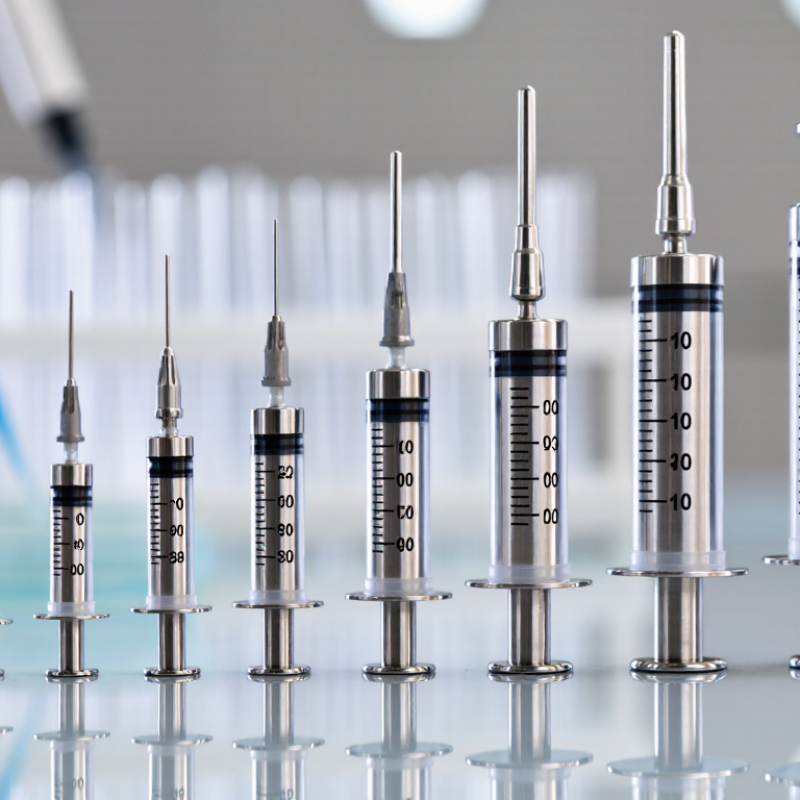
Choosing among seven stainless steel syringe models requires more than comparing capacity. A 1 mL model suits tiny, controlled transfers, while a 5 mL or 10 mL option offers easier handling. Models from 20 mL to 50 mL support thicker liquids and repeated dosing. The 100 mL model is useful for larger laboratory or industrial transfers, but hand fatigue becomes noticeable. It is not always the best choice.
Precision depends on the barrel, plunger fit, graduations, and operator technique. During practical testing, clear markings were easier to read under uneven bench lighting. Smooth plungers also reduced sudden volume changes. However, one model may perform differently with cold fluids or higher viscosity. No syringe is perfect. I would verify calibration before demanding repeatable results. Buyers should also check material certificates, seal compatibility, cleaning procedures, and regional import requirements. These details matter more than a polished product image.
Tips: Match capacity to the smallest expected measurement. A 100 mL syringe is convenient, but poor for fine control. Inspect the tip connection before use, especially after repeated cleaning. Keep a simple calibration record. It can reveal drift that routine inspection misses. For global purchasing, request dimensional drawings and test reports before placing a large order. Small documentation gaps can create expensive delays.
Sterilization Performance: Autoclave Compatibility and ISO 17665
For global buyers, the seven best stainless steel syringes should show real steam-sterilization evidence, not vague “autoclavable” claims. Stainless steel tolerates repeated heat better than many plastics, but construction still matters. Check weld quality, plunger fit, seals, dead spaces, and corrosion resistance. A syringe may survive 121°C steam yet fail after repeated cycles.
ISO 17665 focuses on developing, validating, and routinely controlling moist-heat sterilization processes. It does not automatically certify every syringe. Ask for cycle parameters, loading instructions, material specifications, and validation records. The U.S. CDC identifies steam as the preferred method for heat-stable critical medical devices. Its guidance also stresses proper cleaning before sterilization. Dirt can shield microorganisms from steam.
Cleaning comes first. Always.
The WHO Global report on infection prevention and control notes that effective IPC programs can reduce healthcare-associated infections by up to 70%. This supports careful device reprocessing, but it is not a guarantee for every facility. Buyers should confirm whether each syringe supports 121°C or 134°C cycles, required exposure time, drying conditions, and maximum reuse limits. ISO 17665:2024 also strengthens attention to documented process control and routine monitoring. One practical weakness remains: supplier instructions may be incomplete. Request independent test evidence, inspect the syringe after several cycles, and record discoloration, stiffness, leakage, or pitting before approving large-volume procurement.
Global Compliance: FDA 21 CFR, CE Marking, and ISO 13485
Choosing the seven best stainless steel syringes requires more than comparing barrel size or needle compatibility. Global buyers should examine intended use, pressure tolerance, dead space, and sterilization conditions. A durable syringe may still fail procurement review if its materials lack traceability. Request the steel grade, batch records, biocompatibility evidence, and cleaning validation. Small details matter.
FDA 21 CFR compliance depends on the product’s use and applicable requirements. It is not a single universal approval. Check labeling, manufacturing controls, and any relevant material or device provisions. CE marking also requires care. It indicates conformity with applicable European Union rules, often under the Medical Device Regulation. Some products need assessment by a notified body. ISO 13485 certification demonstrates a controlled quality management system, but it does not automatically approve each syringe. Ask for current certificates, declarations, risk files, and inspection records.
Tips: Match the syringe to its real workflow. Confirm whether repeated sterilization changes seals, markings, or measurement accuracy. Keep supplier documents together. Missing records can delay customs or hospital review. Also, do not treat polished steel as proof of quality. Hands-on testing is wiser. Test leakage, plunger movement, connection security, and calibration using documented methods. I have seen specifications look complete while omitting sterilization cycles. That gap deserves attention. For the seven shortlisted options, compare performance after repeated cleaning, not only when new. Require lot-level traceability and clear instructions in the destination market’s language. Reliable suppliers should answer technical questions consistently, even when the answer is inconvenient.
Buyer Economics: Unit Cost, Service Life, MOQ, and Lead Time
For global buyers, stainless steel syringe economics start with material grade, machining, and quality records. The International Stainless Steel Forum reported approximately 58.4 million tonnes of stainless steel production in 2023. That scale supports supply, but it does not guarantee stable pricing. Nickel and energy costs still influence quotations.
Unit price alone can mislead. A low-cost syringe may use thinner walls, rougher plungers, or inconsistent tips. Ask for dimensional reports, surface-finish data, and material certificates. For reusable models, request cycle-test results at 500, 1,000, or 5,000 uses. The service-life claim needs test conditions. Without them, it is only marketing. ISO 13485-based quality systems can improve traceability, but certification does not replace product inspection.
MOQ and lead time affect cash flow sharply. Standard items may support smaller trial orders, while custom volumes often require tooling and higher MOQs. Confirm whether the quoted MOQ applies per size, finish, or total order. UNCTAD’s Review of Maritime Transport 2024 recorded an 8.5% rise in container capacity over the previous year, yet disruptions can still extend delivery windows. Request a production schedule, inspection date, and shipping buffer. Seven to fifteen working days may suit stocked items; custom work can take several weeks. I would not accept either estimate without written assumptions. The overlooked cost is delay. A cheaper syringe arriving late can become the expensive choice.
