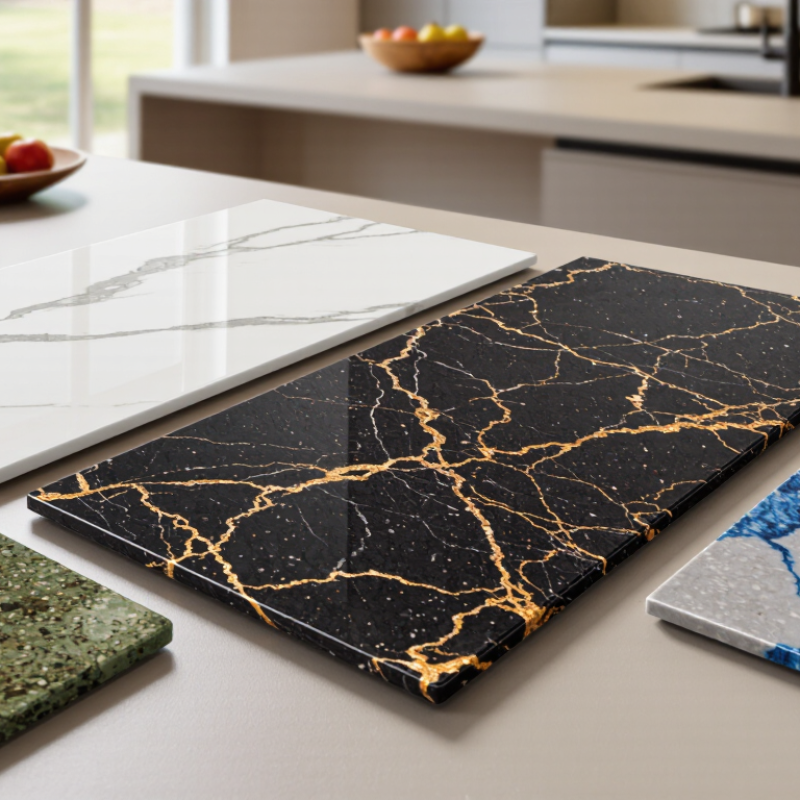
Choosing a granite countertop is not simply a color decision. It is a practical design choice involving durability, maintenance, lighting, and daily habits. A bright White Colonial slab can make a small kitchen feel larger. Black Galaxy granite creates stronger contrast, especially beside pale cabinets. Ubatuba granite offers deep green movement and usually hides crumbs well. Blue Bahia brings dramatic blue veining, but its higher price may challenge a realistic renovation budget.
Stone consultant Fred Hueston has said, “No stone is maintenance-free; the right choice depends on how it will be used.” That advice deserves attention. A busy family kitchen needs a different granite than a lightly used bathroom vanity. Honed surfaces may feel softer and more natural, yet polished finishes often clean more easily. Dark granite can show fingerprints under direct lighting. Pale granite may reveal spills sooner. Neither choice is automatically better.
There is no perfect slab.
This guide compares popular granite types for countertops through a homeowner’s practical lens. It considers appearance, hardness, stain visibility, sealing needs, and fabrication details. Slabs should be viewed in person, not selected from a tiny online image. Veins can change dramatically across one full stone. Even matching samples may look different after installation. A careful fabricator should inspect the slab, confirm the sink cutout, and discuss seam placement before production. Mistakes happen when beauty receives more attention than performance. The best granite is the one that suits the room, the budget, and the people using it every day.
Granite is an natural igneous rock formed when magma cools slowly underground. Its main minerals are quartz, feldspar, mica, and smaller accessory minerals. This composition creates visible crystals, strong color variation, and a surface that feels genuinely stone-like. Technically, granite usually contains about 20–60% quartz, although commercial stone labels are often broader than geological definitions.
For countertops, popular types include White, Black, Gray, and Gold granite. White granite often contains quartz veins and dark mineral specks. Black granite may look uniform, but lighting can reveal silver mica or charcoal movement. Gray granite usually offers a calmer pattern for busy kitchens. Gold varieties bring warmer feldspar tones. The Natural Stone Institute’s Dimension Stone Design Manual recommends evaluating slabs individually because samples cannot show every vein or color shift. ASTM C615/C615M also establishes performance benchmarks, including maximum water absorption of 0.40% for qualifying granite. That figure is useful, but fabrication quality still matters. Seams, edge cuts, and poor support can create problems. I would not treat “granite” as automatically maintenance-free.
Tips: View the full slab in daylight and under indoor lighting. Ask for absorption, density, and strength data when available. Sealers can reduce staining, but they cannot correct weak installation. Test a hidden area before using harsh cleaners. USGS mineral reporting also reminds buyers that natural-stone supply and production vary by region, so availability and pricing can change. Color names can mislead. The stone itself deserves closer inspection.
Granite remains popular because each slab carries a different visual signature. Houzz’s 2024 U.S. Kitchen Trends Study reported granite in about 24% of upgraded countertops, showing its continued relevance. Black granite creates a calm, architectural surface, especially with pale cabinets. White granite can brighten a compact kitchen, but its gray veins may look cooler than expected. Blue granite often shows mineral movement, with flashes that change under warm lighting.
Brown and gold granite types bring a more traditional character. Their amber, cream, and rust flecks can connect wood flooring with bronze hardware. Green granite feels dramatic, though strong patterns may compete with backsplashes. The Natural Stone Institute recommends reviewing full slabs, not small samples, because color and veining vary across each piece. That advice matters in practice. A sample may hide a large dark patch.
The U.S. Geological Survey classifies granite among commercially important dimension stones, supporting its established role in construction and interiors. Still, appearance is only one selection factor. Highly patterned granite can conceal crumbs, while polished black surfaces may reveal fingerprints and water marks. Honed finishes soften reflections but can need more careful sealing. No granite is perfectly uniform. That imperfection is often the appeal, yet it can also frustrate buyers expecting a showroom-like match. Ask the fabricator about the exact slab, edge profile, finish, and recent sealant performance before approving the cut.
When comparing granite countertops, start with color and the room’s natural light. Light granite can make a compact kitchen feel more open. Dark granite creates contrast but may show dust, crumbs, and dried water more clearly. Always view full-size samples near cabinets and flooring. Small showroom pieces can hide unexpected movement.
Pattern affects both appearance and installation. Fine, even patterns offer a calmer surface and disguise minor spills. Bold veining becomes a focal point, especially on a large island. Check how the pattern flows across seams, edges, and cutouts. I once underestimated this detail. The slab looked balanced alone, but awkward after installation.
Durability depends on the stone’s mineral structure, porosity, finish, and maintenance. Granite generally resists heat, scratches, and everyday wear, but it is not indestructible. A heavy impact can chip an edge. Some varieties also absorb liquids faster than others. Ask for absorption and sealing guidance based on the specific slab. Polished surfaces usually resist staining better, while honed finishes may show marks more easily. Seal the countertop when recommended, and wipe acidic spills promptly. My practical rule is simple: choose the pattern you can live with, then confirm its care demands. Natural variation is part of the appeal, yet it can also create regret when expectations are too perfect.
This comparison uses practical 1–5 ratings for common granite countertop categories. Higher scores indicate stronger performance or greater visual variation. Granite is generally a hard, durable stone with typical Mohs hardness around 6–7, but exact performance can vary by mineral composition, finish, sealing, and quarry source.
Granite works best when its pattern supports the room’s visual language. For modern kitchens, choose slabs with quiet movement, cool gray fields, and narrow veining. They pair well with flat cabinets and matte hardware. Traditional kitchens can handle warmer granite, including cream, brown, or muted gold tones. A polished surface reflects more light, while a honed finish feels softer and less formal. It may show fingerprints more easily.
Bathroom choices require tighter control. Small rooms benefit from pale granite, because lighter surfaces can increase perceived space. Dark granite creates drama around a freestanding tub, but it needs strong task lighting. The Natural Stone Institute’s Dimension Stone Design Manual recommends evaluating absorption and sealing needs for each stone, rather than assuming every granite performs identically. That detail matters. Two slabs from the same color family may react differently to water, cosmetics, or acidic cleaners.
The 2024 NKBA Design Trends Report identifies personalization and natural materials as continuing priorities in residential design. Granite supports both, but selection should begin with the cabinet, floor, and lighting samples. Bring them to the fabricator. View the slab vertically and horizontally. ASTM C97 testing can measure absorption and specific gravity, giving buyers more useful evidence than a showroom label. In practice, dramatic granite can overwhelm a compact kitchen. I once preferred a bold pattern, then noticed it competed with every handle and tile. The quieter slab proved easier to live with.
Granite Maintenance, Sealing, and Long-Term Care Needs
Granite countertops can remain attractive for decades, but durability still depends on daily care. Polished granite usually resists staining better than honed or leathered finishes. However, every slab has different porosity. A pale stone may reveal oil marks faster than a dark one. Clean spills quickly with warm water and a pH-neutral stone cleaner. Avoid vinegar, lemon juice, abrasive powders, and harsh scouring pads. These products can dull the finish or weaken the sealer.
Sealing is not a permanent treatment. Test the surface by placing a few drops of water near the sink. If the stone darkens within ten minutes, it may need professional resealing. High-use areas often require more attention than a lightly used island. Follow the sealer manufacturer’s instructions, and never apply a new coat over grease or residue. A clean, dry surface matters. Many care mistakes happen because people seal too often or skip surface preparation.
Tips: Wipe coffee, wine, and cooking oil immediately. Use a cutting board and heat-resistant trivet. Inspect the area around faucets every few months. Small cracks deserve prompt evaluation by a qualified stone professional. Granite is strong, not indestructible. I have seen homeowners ignore tiny stains until they became difficult to remove. Regular care is simple, but it is easy to postpone. That habit can become expensive.
| Granite Type | Typical Appearance | Durability | Stain Visibility | Recommended Sealing Approach | Long-Term Care Needs | Best Use Considerations |
|---|---|---|---|---|---|---|
| Black Granite | Deep black, often with gray, white, or metallic mineral flecks | High | Low to moderate | Seal when water or oil darkens the surface; many dense black slabs may need less frequent sealing. | Wipe water spots and fingerprints promptly because they can be noticeable on polished surfaces. | Good for modern kitchens, vanities, islands, and areas where a dramatic surface is desired. |
| White Granite | White, cream, or light gray background with darker veining or speckling | High | Moderate to high | Use a penetrating stone sealer when the absorption test indicates protection is needed; reseal based on performance rather than a fixed calendar. | Clean spills quickly, especially coffee, wine, cooking oils, and strongly colored foods. | Brightens kitchens and works well with both traditional and contemporary cabinetry. |
| Gray Granite | Cool or warm gray with black, white, silver, or beige mineral patterns | High | Low to moderate | Test the actual slab; apply a breathable penetrating sealer if water absorption is evident. | Routine dusting and cleaning with a pH-neutral stone cleaner are generally sufficient. | A versatile choice that conceals minor crumbs and coordinates with many cabinet colors. |
| Brown and Gold Granite | Tan, brown, gold, beige, and rust-colored crystals or veining | High | Low to moderate | Seal if the stone absorbs water or oil; some lighter slabs benefit from regular testing because absorption varies. | Remove oily spills promptly to help prevent temporary or persistent darkening. | Complements warm wood cabinetry, earth-tone interiors, and traditional kitchen designs. |
| Green Granite | Green background with black, gray, white, or golden mineral movement | High | Low to moderate | Check absorption on an inconspicuous area and use a sealer compatible with the stone’s finish. | Avoid acidic cleaners and abrasive pads that can dull the polished finish. | Suitable for statement islands, accent countertops, and spaces with natural color palettes. |
| Blue Granite | Blue-gray, steel blue, or muted blue tones with contrasting mineral patterns | High | Moderate | Use a penetrating sealer when the slab fails a water-absorption test; test first because mineral composition differs. | Clean spills soon after they occur and avoid leaving wet containers on the surface for extended periods. | Creates a distinctive focal point and pairs well with white, gray, or natural wood cabinetry. |
| Flamed or Leathered Granite | Textured, low-sheen surface with a natural or tactile appearance | High | Moderate | Texture can increase cleaning effort; apply a suitable penetrating sealer if absorption is present and follow the fabricator’s guidance. | Use a soft brush or microfiber cloth to remove particles from the textured surface; avoid waxy coatings that can collect residue. | Useful when a natural, matte, or slip-resistant-looking finish is preferred over high gloss. |
WhatsApp us