A Bubble Pendant Lamp can change the feel of a room without taking over its design. Its rounded glass shades catch daylight, soften evening light, and add a little movement above a dining table or kitchen island. The effect depends on more than appearance. Shade size, glass clarity, ceiling height, and bulb brightness all matter.
This 2026 guide explores bubble pendant lamps for modern homes, with attention to practical details shoppers can check before buying. We consider how each fixture may suit different spaces, from a compact breakfast nook to an open living area. We also look at materials, finish quality, installation needs, and whether the light is adjustable or dimmable. Small details count. A wide cluster can feel crowded in a low-ceiling room, while a single glass globe may seem lost over a long table.
Product descriptions do not always reveal how a fixture looks after dark, and photographs can make glass appear clearer or larger than it is. That uncertainty deserves a closer look. Rather than treating every sculptural design as an easy match, this guide weighs visual appeal against room scale, everyday use, and maintenance. Use it to narrow your options, then confirm measurements and electrical requirements with the product information. A beautiful lamp should work well, too.
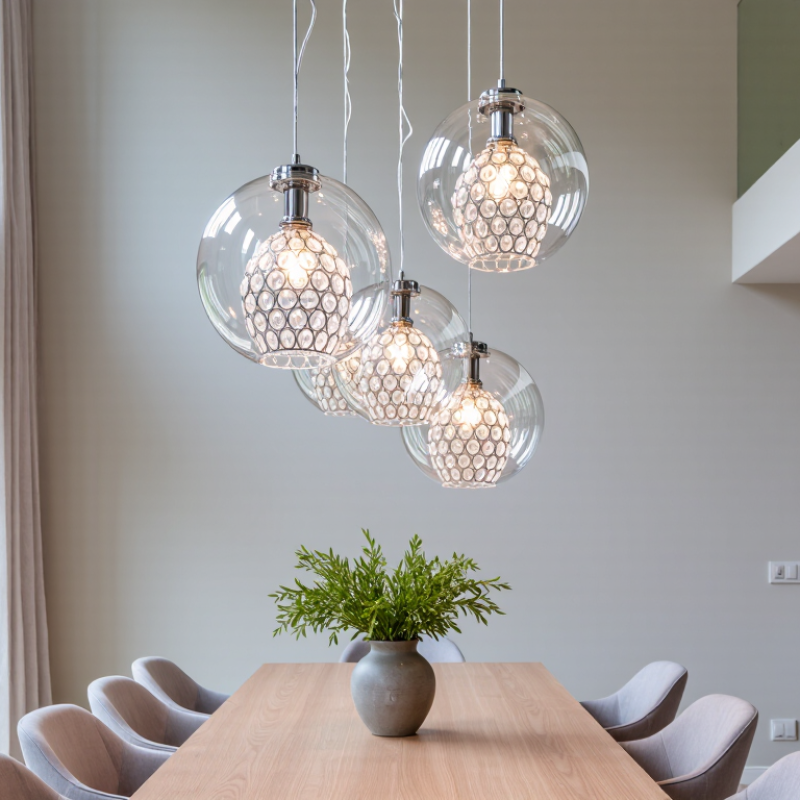
A bubble pendant lamp is a hanging light with one or more rounded shades that resemble bubbles. Its defining feature is the globe-like form, not a particular size or material. Shades may be clear, frosted, or tinted, and are often made from glass or another translucent material. Their curved outlines soften a room’s straight edges and bring the eye toward a dining table, kitchen island, or reading nook. It feels lighter.
The shade affects how the lamp looks and performs. A clear globe exposes the bulb and sends light in several directions, but it may create glare at eye level. Frosted glass diffuses the light, giving nearby surfaces a gentler glow. Small detail. The bulb’s brightness and color also matter, especially above a work surface where even, useful illumination is important.
Bubble pendants can use a single globe or several suspended at different heights. Before choosing one, consider the ceiling height, the area below it, and whether the fixture needs to provide task lighting or mainly set an atmosphere. A striking cluster can look balanced in a spacious room, yet feel crowded over a small table. That trade-off is easy to overlook.
2026 Best Bubble Pendant Lamps for Modern Homes
Material choice changes both the look and the upkeep of a bubble pendant. Clear glass reveals the bulb and keeps a cluster visually light, but fingerprints and dust show quickly. Frosted glass softens glare and spreads light more evenly across a dining table. Acrylic can reduce weight, though its surface may scratch more easily. Metal fittings add structure; check that the canopy and suspension hardware feel appropriate for the fixture’s size. Scale matters. A row of small globes suits a narrow island, while one oversized sphere can dominate a compact room.
Shape affects how light reaches the room. Opal globes offer broad, diffused illumination; clear spheres create brighter points and stronger reflections. The U.S. Department of Energy’s Energy Saver guidance says LEDs use at least 75% less energy and last up to 25 times longer than incandescent bulbs. That makes an LED-compatible pendant a practical choice, but dimmer compatibility still needs checking. Check the dimmer. The International Energy Agency has reported that lighting accounts for roughly 15% of global electricity consumption, reinforcing the value of efficient lamps. In daily use, the best choice is not always the most sculptural one: consider glare at seated eye level, bulb replacement access, and whether the fixture’s color temperature feels comfortable at night. I would still treat published efficiency figures as a starting point, not a promise for every bulb and fitting.
| Design Type | Common Materials | Shape and Visual Effect | Lighting Characteristics | Suitable Placement | What to Check Before Buying |
|---|---|---|---|---|---|
| Single Clear Globe | Blown or molded clear glass; metal socket and canopy | One spherical shade creates a simple, airy focal point and leaves the light source visible. | Provides direct and surrounding light. A clear shade can produce more glare than a diffusing shade, depending on bulb position and brightness. | Kitchen islands, bedside areas, entryways, and compact dining spaces | Check the permitted bulb type and maximum wattage. Choose a compatible dimmable bulb and dimmer if adjustable brightness is needed. |
| Opal Glass Globe | Opal or frosted glass; metal fittings | A smooth, softly glowing sphere with the bulb less visible through the shade. | Diffuses light more evenly than clear glass, helping reduce the visibility of a bright point source. Light output depends on the bulb and glass opacity. | Bedrooms, living rooms, hallways, and dining areas where softer light is preferred | Confirm whether the glass is fully opaque or partially diffusing, and check the bulb’s lumen output and color temperature. |
| Multi-Globe Cluster | Clear, opal, or tinted glass globes with a metal canopy and suspension cables | Several spheres arranged at different heights add dimension and distribute visual weight across a larger area. | Multiple light sources can spread illumination, but the fixture’s total output depends on the number and rating of its bulbs. | Over dining tables, stairwells, double-height rooms, and larger living spaces | Measure the ceiling height and table or floor clearance. Check the total fixture weight, mounting requirements, and whether bulbs are included. |
| Smoked Glass Globe | Gray or bronze-tinted glass; metal fittings | A tinted sphere adds contrast and a subdued, contemporary look. | Tinted glass reduces the amount of light passing through compared with clear glass. The visible bulb can still create glare. | Accent lighting in living rooms, dining areas, and kitchens with additional ambient lighting | Check the shade tint and rated light output. Avoid relying on a dark-tinted pendant as the only source of room lighting. |
| Acrylic Bubble Globe | Clear or diffusing acrylic; metal or polymer fittings | A lightweight spherical shade can resemble glass while offering a less fragile option. | Light transmission and diffusion vary by acrylic finish. Some materials may show scratches or discolor over time, depending on quality and exposure. | Children’s rooms, casual dining areas, and locations where lower weight is useful | Review the manufacturer’s cleaning instructions, heat limits, and approved light source; avoid using bulbs that exceed the fixture’s rating. |
| Mixed-Size Globe Composition | Glass globes in varied sizes, often paired with metal arms or a central frame | Combines large and small bubbles for a sculptural arrangement that reads as both lighting and a decorative feature. | Light distribution depends on globe orientation, shade finish, and bulb placement. Open gaps between globes allow some light to pass directly into the room. | Large dining rooms, open-plan spaces, and rooms with a high ceiling | Check the overall width and height, suspension adjustment range, number of light sources, and suitability for the ceiling junction box. |
Bubble pendant lamps bring soft, rounded shapes into modern rooms without making the design feel severe. A single clear-glass globe suits a compact dining nook or bedside corner, where its outline stays light against the walls. Small rooms need restraint. Choose a globe sized for the table, not just the ceiling height.
Clustered bubble pendants create a fuller focal point above a kitchen island or stairwell. Different globe sizes add movement, while matching glass finishes keep the arrangement calm. Linear versions work well over long tables; evenly spaced bulbs spread light across the surface. Details matter. Check the canopy size and ceiling support before choosing a heavier cluster, especially in older homes.
Clear glass shows the bulb and gives a crisp, open look, but it can reveal dust and glare. Frosted glass softens the light and feels gentler at eye level. Smoked glass adds contrast, though it may reduce brightness. Match the lamp’s output to the room’s task, and use a dimmer where compatible. One overlooked issue: a beautiful pendant can still feel awkward if it hangs too low. Measure from the tabletop, then leave enough room for conversation and clear sightlines.
Compare example globe counts across popular bubble pendant layouts.
Globe counts are illustrative examples of common fixture configurations, not sales figures or a ranking. Actual designs vary by manufacturer and model.
Choosing a bubble pendant starts with the room, not the product photo. Measure the table or island, then compare its width with the fixture. A pendant that is too narrow can look lost; an oversized cluster may crowd the view. For many dining areas, a fixture around one-half to two-thirds of the table’s width is a useful starting point, not a fixed rule. Stand back and check the proportions.
Ceiling height affects comfort and appearance. Over a dining table, leave enough clearance for people to see across it without looking through the glass. In a low-ceiling room, choose a compact arrangement rather than a long cascade. Notice the bubble sizes, too: closely grouped globes create a fuller look, while wider spacing feels lighter.
Small detail. Dust can show on clear glass, so consider how easily each globe can be reached and cleaned.
Check the socket type, recommended bulb, and dimmer compatibility before buying. Warm light often feels inviting at dinner, while brighter settings can help with everyday tasks. The glass may soften light, but it does not guarantee even illumination; use other room lighting if the pendant leaves dark corners.
One detail is easy to underestimate: glare. View the fixture from seated and standing positions, and verify that the ceiling support can carry its weight. A little extra measuring is less exciting than choosing a shape, but it can prevent a costly mismatch.
For a bubble pendant, placement is about more than appearance. Over a kitchen island, use 30–36 inches between the counter and the lowest glass globe as a practical starting point. Adjust for ceiling height, seated sightlines, and globe size. In a cluster, leave enough space for each sphere to read clearly; crowded glass can look messy. Measure twice. I still find that paper templates reveal awkward spacing better than guessing from the floor.
Before installation, switch off the circuit at the breaker and confirm the power is off. Check that the ceiling box and mounting hardware can support the fixture’s weight. Bubble pendants can be heavier than they appear, especially when several glass globes hang from one canopy. Follow the fixture instructions, and ask a qualified electrician to handle uncertain wiring or reinforcement. A loose mount is not a small flaw.
For care, let the bulbs cool, then wipe glass with a soft, slightly damp cloth. Keep moisture away from sockets and wiring, and dry each globe before restoring power. Avoid abrasive pads; they can leave fine scratches that catch the light. Choose compatible LED bulbs: the U.S. Department of Energy’s Energy Saver guidance reports that LEDs use at least 75% less energy and last up to 25 times longer than incandescent bulbs. Keep it dry. I would still check bulb compatibility before buying.
WhatsApp us